How Much Wet Food Should a Kitten Eat Per Day?
Last Updated: September 2026 | Reviewed by Pet Nutrition Standards (FEDIAF & AAHA Guidelines)
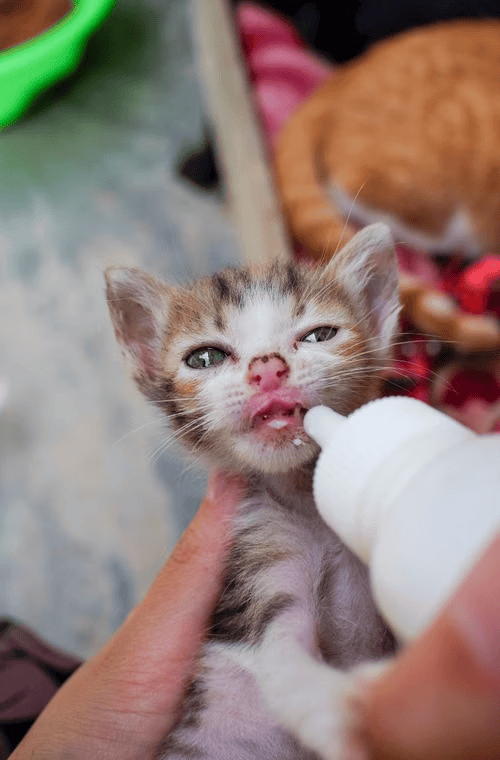
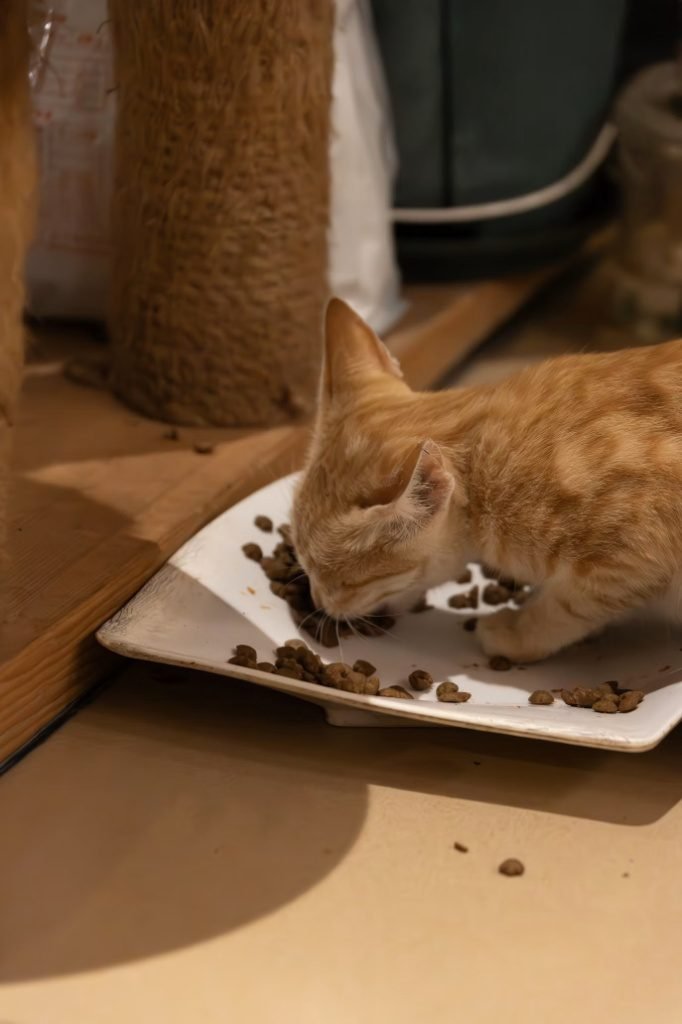
A hungry kitten circling your ankles at dinner time makes it hard to judge whether you’re feeding too little or too much. Because kittens grow so fast, the amount of wet food they need changes every few weeks, which is exactly why the instructions on one pouch rarely match what your vet or breeder told you.
How much wet food to feed a kitten at each age and weight, how to work out portions from the calorie information on the pack, and how often to serve it so your kitten grows at a healthy, steady rate.
Most kittens need roughly 200 kcal per kg of body weight a day at 8–10 weeks old, dropping gradually to around 80 kcal per kg by 10–12 months. In practical terms, that is about 200–350g of standard wet kitten food daily (approx. 2.5 to 4 standard 85g pouches), split across 3–5 small meals depending on their age and weight.
Why Kitten Portions Are Different From Adult Cats
How much to feed a kitten comes down to their rapid growth rate, which require about double the energy per kilogram of body weight compared to adult cats to support rapid muscle, bone, and organ growth. However, their daily caloric needs drop steadily as they mature falling from roughly 200 kcal/kg at 10 weeks to 80 kcal/kg by 10 months, according to the AAHA/AAFP Feline Life Stage Guidelines. Consequently, a portion that suffices at 8 weeks will leave a 5-month-old kitten underfed.
Wet food is crucial during this stage: its high moisture content (70–80% vs. 6–10% in dry kibble) promotes hydration and long-term urinary tract health, as highlighted in Cats Protection feeding advice. This is why UK veterinary charities recommend wet or mixed feeding routines over dry-only diets.
Kitten Wet Food Portion Size Chart by Age and Weight
The table below gives approximate daily amounts for kittens fed an all-wet food diet, assuming an average energy density of 90 kcal per 100g (or ~75–80 kcal per standard 85g pouch). Calorie density varies between brands and textures (pâté, mousse, or chunks in jelly), so treat these figures as a starting point.
Note: Larger breeds such as Maine Coons continue growing well past 12 months and require adjusted portions, whereas smaller breeds plateau earlier. If your kitten appears under- or overweight, consult a veterinary nurse for a body condition assessment.
How to Work Out Your Kitten’s Exact Portion
Calculating portions directly from calories is significantly more accurate than relying on generic gram guidelines.
Step 1: Calculate Daily Caloric Need
Weigh your kitten in kilograms and multiply by the appropriate age factor:
- Under 12 weeks: ~200 kcal / kg
- 4–5 months: ~130 kcal / kg
- 10–12 months: ~80 kcal / kg
Step 2: Check Packaging Kcal Content
UK wet kitten food labels list energy density as kcal per 100g or kcal per pouch/can under FEDIAF pet food industry guidelines. Always check your specific brand.
Step 3: Divide Total Calories by Food Density
For example, a 12-week-old kitten weighing 1.4 kg needs roughly 250 kcal daily. If your wet food provides 85 kcal per 100g, calculate:
Split this into 4 meals of ~73g each.
How Often Should Kittens Eat Wet Food?
Kittens have small stomach capacities relative to their high energy requirements, requiring frequent meals:
- 8–12 weeks: 4–5 small meals per day
- 3–5 months: 3–4 meals per day
- 6–9 months: 2–3 meals per day
- 10–12 months: 2 meals per day (transitioning to adult routines)
PDSA guidance recommends stepping meal frequency down gradually as kittens mature. Because wet food spoils at room temperature, never leave wet meals sitting out for free-feeding.
Wet Food or Dry Food: What’s Right for Your Kitten?
Wet Food Only
Ideal for kittens requiring maximum hydration or those with sensitive digestive systems. Requires rigid meal schedules since food cannot sit out.
Mixed Feeding (Wet + Dry)
The approach most commonly recommended by UK veterinary charities. Combines moisture benefits with dental grazing.
Important: The combined calories of both food types must equal the daily target do not feed full portions of both. Serve wet food at set mealtimes, and calculate remaining portions using our dry food guide .
Dry Kibble Only
Meets growth requirements if fed as a complete formula, but requires proactive water monitoring to ensure proper hydration.
Always ensure food is labelled “complete” rather than “complementary” to guarantee it fulfills full FEDIAF growth standards.
Feeding Mistakes That Affect Kitten Growth
Some common mistakes must be need to avoid:
Feeding by eye instead of by weight. A kitten’s appetite isn’t always a reliable guide, and guessing portions tends to drift upward over time. Weighing food, at least occasionally, keeps portions accurate.
Using adult cat feeding guides. Adult wet food is formulated with lower protein and calorie density than kitten food, and following adult portion guidance during the growth phase risks under-feeding.
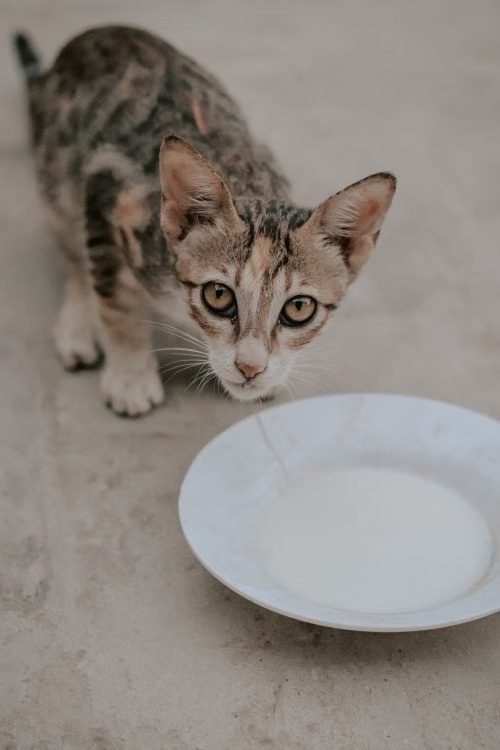
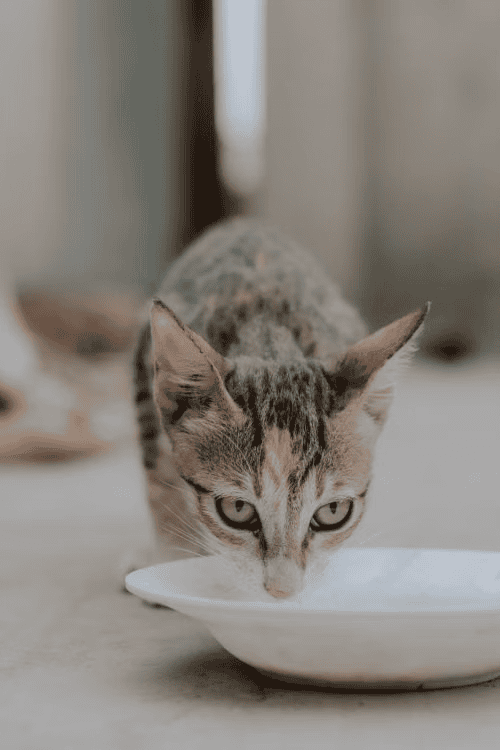
Offering cow’s milk instead of water. Cow’s milk is not okay for kittens and should never replace fresh water. It can cause stomach upset, vomiting or diarrhoea, and it does not provide the balanced nutrition a growing kitten needs. Learn why cow’s milk is not recommended for kittens and what they should drink instead.
Leaving wet food out for hours. Wet food left at room temperature can spoil within 2–4 hours, especially in a warm kitchen, creating a risk of bacterial contamination. Uneaten portions should be removed and refrigerated or discarded.
Not adjusting after neutering. Neutering typically reduces a cat’s metabolic rate, so portions that were right beforehand may need a slight reduction afterward to avoid excess weight gain.
Assuming one pouch size fits every kitten. An 8-week-old and a 6-month-old kitten have very different needs, so relying on “one pouch, twice a day” throughout the first year usually leads to under- or over-feeding at some stage.
Common Kitten Feeding Misconceptions
Misinformation about daily portions and food safety can easily disrupt your kitten’s growth plan or lead to unintended weight gain. Here is the scientific reality behind the most common kitten feeding misconceptions:
- Misconception: Kittens need less food than adult cats because of their small size.
- Fact: Per kilogram of body weight, kittens actually require roughly double the calories of an adult cat to support rapid muscle, bone, and organ growth.
- Misconception: A kitten finishing their bowl rapidly means they are underfed.
- Fact: Fast eating is usually a natural behavioural instinct rather than a sign of true hunger. Monitoring weekly weight gains and assessing rib coverage (body condition scoring) are far more reliable portioning indicators than eating speed.
- Misconception: Wet food can be left out continuously for grazing like dry kibble.
- Fact: Wet food oxidises and breeds harmful bacteria quickly at room temperature. Uneaten wet food should be removed after 2 hours to protect your kitten’s digestive health.
Nutritional Benefits of Wet Kitten Food
High Moisture Content: Canned wet food contains at least 75% moisture, making it an outstanding daily dietary source of water to keep growing kittens hydrated.
Superior Protein Profile: Wet kitten diets deliver higher protein levels and significantly lower carbohydrates compared to standard dry kibble, supporting lean muscle growth.
Expert Endorsed: Research from the Cornell Feline Health Center confirms that this moisture-rich balance provides optimal nutritional density for young felines.
Practical Tips for Feeding Wet Food to Kittens
Weigh weekly: Use digital kitchen scales to log weekly weight gains during the first 6 months.
Warm refrigerated portions: Take chilled food out 15 minutes before serving or warm gently; room-temperature food improves smell and palatability.
Transition brands slowly: Shift between different wet food brands over 5–7 days to avoid stomach upsets.
Consult your vet team: Review body condition scores with a veterinary nurse during routine vaccination visits.
Key Recommendations
- Kitten wet food portions should be calculated from calorie needs and the food’s energy density, not estimated by eye.
- Daily requirements are highest relative to body weight at around 8–10 weeks and gradually decrease toward adult levels by 10–12 months.
- Frequent, smaller meals suit a kitten’s stomach capacity better than one or two large servings.
- Weekly weight checks and body condition scoring are more reliable than following a single fixed chart.
- Wet food should never be left out for extended periods due to spoilage risk.
- When in doubt, a vet or veterinary nurse can weigh your kitten and confirm portions are on track.
Kitten Wet Food Feeding: Essential Questions Answered
Is it okay to feed a kitten wet food every day? +
Yes. Complete wet kitten foods supply all necessary amino acids, taurine, fatty acids, and minerals required for growth without needing dry food supplements, as outlined in FEDIAF Nutritional Guidelines.
Why is my kitten still meowing after eating wet food? +
Meowing after meals often indicates vocal habits, play-seeking, or fast eating rather than true hunger. Verify daily intake against the gram portion chart first before offering extra food.
Should wet kitten food be served warm or cold? +
Serve wet food at room temperature or slightly warm. Cold food straight from the fridge reduces aroma, making it less palatable, and can trigger stomach sensitivity.
References & Further Reading
- American Animal Hospital Association / American Association of Feline Practitioners. Feline Life Stage Guidelines, 2021.
- FEDIAF (European Pet Food Industry Federation). Nutritional Guidelines for Complete and Complementary Pet Food for Cats and Dogs, 2023.
- PDSA. Kitten Diet and Behaviour, 2026.
- Cats Protection. Feeding Your Cat Guidance, 2026.