TRUSTED PET CARE INFORMATION
Everything Your Pet Needs
for a Happy & Healthy Life
Practical pet care guides, breed information, health advice, nutrition tips, and helpful resources for pet owners.
EXPLORE PET TOPICS
Find What You’re Looking For
Get trusted information on different pets, care tips, and expert advice all in one place.
Dogs
Discover practical tips for dog care, health, training, nutrition, and everyday wellbeing.
Cats
Explore cat care, health, nutrition, grooming, behavior, and everyday tips to help your feline friend live a happy and healthy life.
Puppy
Get to Know puppy care tips covering nutrition, training, socialization, grooming, health, and healthy development.
Trusted Pet Care Information for Every Stage of Life
Pets are more than animals living in our homes. They are companions that depend on us for their health, comfort, safety, and wellbeing.
At PetsProd, we provide practical pet care advice designed to help owners make better decisions about everyday animal care.
From choosing suitable nutrition and understanding behaviour to creating healthy routines, our guides help you support your pet through every stage of life.
Explore trusted information about:
- Dogs
- Cats
- Puppies
- Kittens
- Small pets
- Nutrition
- Grooming
- Training
- Enrichment

What Does Good Pet Care Include?
Good pet care means providing the right food, healthcare, environment, exercise, grooming, training, and enrichment based on your pet’s individual needs.
Every pet is different. A puppy, adult dog, kitten, senior cat, rabbit, and hamster all require different approaches to care.
Practical Pet Care Information For Everyday Owners
Pet ownership becomes easier when owners understand their animals. PetsProd focuses on clear, practical guidance covering the areas that matter most:
Daily Care
Routines
Feeding
Decisions
Health
Awareness
Behaviour
Understanding
Grooming
Needs
Training
Support
Enrichment
Ideas
Instead, we help owners build a stronger understanding of responsible pet ownership and everyday care.

Happier Lives ♡
PET CARE BY ANIMAL
Explore Pet Care Topics
Find practical care information tailored to the needs of different pets. Explore guidance covering health, nutrition, behaviour, training, grooming, and everyday care.

Dogs
Dog Care
Dogs have unique needs involving nutrition, exercise, training, grooming, and behaviour.

CATS
Cats Care
Cats have unique needs involving nutrition, health, grooming, behaviour, and a safe environment.

PUPPIES
Puppies Care
Puppies need extra care during their early development, including proper nutrition, training, socialisation, grooming, and regular health checks.

Kitten
Kitten Care
Kittens need gentle care during their early development, including proper nutrition, grooming, socialisation, play, and regular health care.
What Is Included In Basic Pet Care
Basic pet care covers five core areas that apply to almost every species kept as a household pet. These are feeding and nutrition, hygiene and grooming, exercise, safety, and regular vet check ups.
Food And Nutrition
Proper pet care starts with consistent daily routines rather than occasional attention. Essential pet care includes clean water at all times and a balanced diet suited to the animal’s age and breed.
According to PDSA cost of ownership research, minimum monthly dog care costs range from £69 to £116. Cat ownership follows a similar structure, with PDSA estimating a minimum monthly cost of around £79.
Hygiene and Grooming
A complete pet care guide also accounts for hygiene routines such as grooming, nail trimming, and dental care. Grooming costs in the UK average £52 per month for dogs, ranging from £25 to £110 depending on breed and coat type.
For cats, professional grooming typically, Most short haired cats manage well with regular home brushing alone.
Pet Health and Wellbeing
A healthy pet needs more than the right food and exercise. Regular health checks, good hygiene, a safe environment, and attention to changes in behaviour can all support your pet’s overall wellbeing.
Wellbeing is not just about avoiding illness. It also includes mental stimulation, comfort, and a stable daily routine that suits your pet’s individual needs.
Regular Health Checks
Routine veterinary checks can help identify potential health problems early. Catching issues before they progress often makes treatment simpler and less costly.
Vaccinations, parasite prevention, dental care, and age appropriate health checks should form part of a responsible pet care routine. Most adult pets benefit from at least one full check up a year, while puppies, kittens, and senior pets often need more frequent visits

Nutrition and Healthy Weight
A balanced diet should match your pet’s species, age, size, activity level, and individual needs. What works for a young, active dog is very different from what suits a senior cat or a small pet like a rabbit.
Providing appropriate portions and monitoring body condition can help reduce the risk of weight related health problems. Obesity is one of the most commonly seen preventable conditions in UK pets, and it can contribute to joint problems, diabetes, and reduced life expectancy.
Regularly checking your pet’s weight and adjusting portions as needed is a simple habit that supports long term health.
Exercise and Mental Wellbeing
Physical activity helps pets maintain fitness, while play and enrichment support their mental wellbeing. A lack of stimulation can sometimes lead to boredom related behaviour, such as excessive chewing, scratching, or restlessness.
Dogs may benefit from walks and interactive games, while cats and small pets need activities suited to their natural behaviours. For cats, this often means climbing, scratching, and hunting style play. For rabbits and guinea pigs, foraging opportunities and safe space to move around matter just as much as physical exercise.
Signs Your Pet May Need Attention
Changes in eating, drinking, activity, grooming, behaviour, or toilet habits can sometimes indicate that something is wrong.
These changes are not always dramatic. A pet eating slightly less than usual, sleeping more, or grooming itself excessively can all be early signs worth paying attention to.
If you notice unusual or persistent changes, speak with a qualified veterinary professional. Acting early is generally safer and often more affordable than waiting to see if symptoms resolve on their own.
Trusted Pet Care Advice and Information
Reliable pet care advice should be backed by veterinary sources or established welfare organisations rather than unverified opinion.
Free pet advice is widely available through charities such as the RSPCA, PDSA,WSAVA, and FEDIAF. and Cats Protection, all of which publish species specific guidance covering diet, behaviour, and preventative health.
Online pet advice has improved significantly in recent years, with more vet reviewed pet care information now available compared to a decade ago.
Good pet care resources typically include:

This kind of pet care advice helps owners make confident, informed decisions rather than reacting to guesswork.
When evaluating any pet care advice online, check whether the source cites a recognised veterinary body, charity, or qualified professional. Cross referencing advice across two or three trusted sources is generally considered good practice.
Pet Care
Qualifications
Working professionally within the pet care industry generally requires a recognised pet care qualification. This demonstrates skills in animal handling, health monitoring, and welfare standards.
Many local councils require evidence of relevant qualifications before issuing an animal activities licence.
Grants and Financial Support
Pet care grants and financial support schemes exist through several UK charities to help owners cover unexpected veterinary costs.
According to PDSA’s own reporting, around thirty percent of UK pet owners have expressed concern about how they would pay for vet bills if their pet became ill or injured.
Diagnostics
Pet care diagnostics now include home testing kits for conditions such as urinary issues or diabetes, alongside standard vet led screening during annual check ups.
Choosing the Right Pet for Your Lifestyle
Selecting a pet that matches your living situation, schedule, and budget reduces the risk of rehoming later. This remains one of the most common reasons animals end up in UK rescue centres.
Dogs generally suit owners with time for daily walks and consistent routines. Cats can work well for people with less flexible schedules, provided their environmental and social needs are still met.
Small pets such as guinea pigs, hamsters, and fish are often recommended for first time owners or those with limited living space. Rabbits are sometimes miscategorised as low maintenance, when in practice they need almost as much space and attention as a small dog.
Before choosing a pet, calculate not just the purchase or adoption cost, but the ongoing monthly and annual costs outlined above, along with a buffer for unexpected veterinary bills.
Also consider housing type, whether renting restrictions apply to pet ownership, existing pets in the household, and any allergies among family members.

Common Pet Health Issues to Watch For
Recognising early signs of illness is a core part of responsible pet care, since many conditions are more manageable and less costly when caught early.
Across all species, changes in appetite, energy levels, toilet habits, or general behaviour are the most reliable early warning signs of a developing health issue.
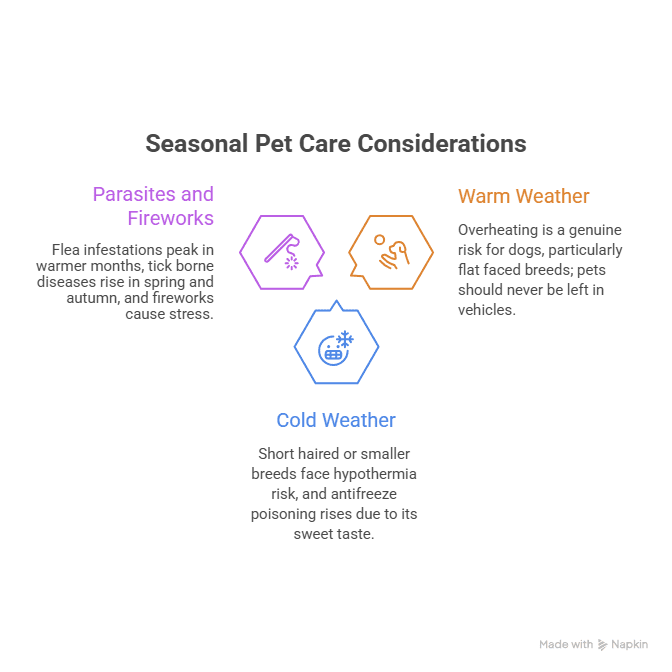
Seasonal Pet Care Considerations]
Warm Weather
Overheating is a genuine risk for dogs, particularly flat faced breeds. Pets should never be left in vehicles, even briefly, since car interiors can reach dangerous temperatures within minutes.
Cold Weather
Short haired or smaller breeds face a higher risk of hypothermia. Antifreeze poisoning also rises in winter, since the sweet taste is attractive to pets despite being highly toxic.
Parasites and Fireworks
Flea infestations tend to peak during warmer months, while certain tick borne diseases become more common in spring and autumn. Fireworks periods, particularly around November, are also a recognised stress point for many dogs and cats.