How Much Dry Food Should You Feed a Kitten? Age & Weight Portion Chart
Last Updated: September 2026 | Reviewed by Pet Nutrition Standards
A bag of kitten kibble usually includes a feeding table on the back, but knowing how much dry food to feed a kitten can be confusing when the recommended amount differs from advice provided by your vet, breeder or another feeding calculator. Kibble also varies in calorie density between brands, so the same volume of food can provide significantly different amounts of energy.
The right portion depends on your kitten’s age, weight, growth and the calories in the food you are using. You can use the feeding information on the packaging as a starting point, then adjust the amount as your kitten grows and their body condition changes.
For example, a dry food providing 400 kcal per 100g requires a different portion from one providing 350 or 450 kcal per 100g. Always consult the feeding guide and kcal information printed on your own food packaging rather than relying on a generic gram or cup measurement.
A kitten’s calorie requirements also change rapidly during growth. Younger kittens generally require smaller, more frequent meals, while older kittens gradually transition to fewer meals.
Why Kitten Portions Differ From Adult Feeding Guides
Kittens have substantially higher energy requirements relative to their body weight than adult cats because they are growing rapidly. The AAHA and AAFP Feline Life Stage Guidelines report that a growing kitten at approximately 10 weeks of age may require around 200 kcal per kg of body weight per day, compared with approximately 80 kcal per kg at 10 months.
This does not mean that every kitten should be fed exactly 200 or 80 kcal per kg. Age, size, activity level, body condition, neutering status and health can all influence an individual kitten’s requirements.
Kitten food is formulated specifically for growth and should provide the nutrients required during this developmental stage. In the UK, choose a complete food labelled as suitable for kittens or growth and development. FEDIAF’s nutritional guidelines provide the European reference framework used when formulating complete and complementary pet foods.
This is why using an adult cat feeding chart or simply measuring out a small handful can produce an inaccurate result. A better approach is to begin with the manufacturer’s feeding guide, check the food’s energy density, and then monitor your kitten’s weight and body condition.
Daily Dry Food Portions by Age and Weight
The table below provides illustrative starting ranges, not fixed prescriptions. It assumes a dry food with an energy density of approximately 375 kcal per 100g.
These figures are illustrative only. Individual kittens may fall outside these weight and calorie ranges.
The calculation behind the table is:
For example, if a kitten requires 240 kcal per day and the food provides 375 kcal per 100g:
240 ÷ 375 × 100 = 64g per day
This 64g should then be divided between the kitten’s meals.
The actual amount may differ considerably between brands because dry foods have different energy densities. Your food’s packaging should therefore be the starting point when determining the final portion.
Larger breeds, such as Maine Coons, may continue growing for longer than many average-sized cats. Their feeding plan may therefore need to remain appropriate for growth for an extended period. Discuss the timing of the transition to adult food with your vet if you have a large-breed kitten.
How Age, Breed Size and Activity Affect Kitten Food Portions
A highly active kitten may require more energy than a calmer kitten of the same weight. Similarly, two kittens of the same age may have different calorie requirements because their body size, activity level and growth rates are not identical.
The figures above should therefore be treated as a starting point rather than a fixed prescription.
Indoor living does not automatically mean that a kitten requires very little food. Instead, monitor body condition and weight regularly. If a kitten is gaining weight too quickly, the daily portion may need to be adjusted. If growth is poor or the kitten remains unusually hungry, consult a vet rather than making substantial changes independently.
How to Calculate Your Kitten’s Daily Calorie Needs
There are two useful approaches to calculating calorie requirements.
For most owners, the simplest option is to begin with the feeding guide for the specific kitten food, then adjust the amount according to weight and body condition.
For a more mathematical estimate, veterinary nutrition calculations commonly begin with the Resting Energy Requirement, or RER.
For a healthy growing kitten, the Merck Veterinary Manual lists a general maintenance estimate of approximately 2.5 × RER. This is a starting point rather than a fixed prescription, and actual requirements may vary between individuals.
A simpler calorie-to-gram formula
If you already know the kitten’s daily calorie target:
Daily grams = Daily calorie target ÷ food kcal per 100g × 100
For example:
240 kcal ÷ 400 kcal × 100 = 60g
A food providing 400 kcal per 100g would therefore require approximately 60g to provide 240 kcal.
Do not rely on the maths alone
A calorie formula provides a starting point. It cannot account for your kitten’s exact growth rate, activity level, body condition or health status.
Weigh your kitten regularly and monitor body condition. You should be able to feel the ribs without them being heavily covered by fat, while the ribs should not be visibly prominent in a healthy growing kitten.
If your kitten is not growing as expected, is losing weight, has persistent diarrhoea or vomiting, appears unusually lethargic or experiences a significant change in appetite, consult your vet.
Free Feeding or Scheduled Meals: What Actually Works?
There is no single feeding routine suitable for every kitten, but measured meals make it easier to determine how much food your kitten is actually consuming.
Free feeding can make portion control more difficult, particularly when feeding calorie-dense dry food. It can also make changes in appetite harder to identify.
For many kittens, measured portions divided across several meals provide a straightforward way to manage intake and monitor appetite.
How Many Meals Does a Kitten Need Each Day?
A practical starting routine is:
8 to 12 weeks: 4 to 5 small meals a day
3 to 5 months: 3 to 4 meals a day
6 to 12 months: 2 to 3 meals a day
The exact routine may vary according to the kitten, household schedule and veterinary advice.
Smaller meals can be beneficial because kittens have small stomachs and high energy requirements during growth. The AAHA and AAFP guidelines also recommend discussing feeding quantity and frequency as part of kitten nutrition care.
Combining Wet and Dry Food Without Overfeeding
Combining wet and dry food can be a practical feeding strategy. The important consideration is that the calories from both foods must be counted together.
For example, suppose your kitten has a daily target of approximately 240 kcal.
If the wet food provides approximately 90 kcal per pouch and the dry food provides 400 kcal per 100g, you can calculate a combination that remains close to the daily calorie target.
The exact combination depends on the calorie content of your particular wet and dry foods.
Do not provide a full recommended portion of wet food and then add a full recommended portion of dry food unless the manufacturer specifically states that both amounts are intended to be fed together.
The key consideration is not whether wet or dry food is automatically better. The diet should be complete and appropriate for the kitten, and the total daily intake should correspond to the individual kitten’s needs.
Hydration Needs When Kibble Dominates
Dry food contains considerably less moisture than wet food, so kittens eating primarily kibble should always have access to fresh drinking water.
Keep water available throughout the day and clean the bowl regularly. Some cats prefer moving water, so a fountain may be useful if your kitten drinks more readily from one.
If your kitten consistently drinks very little or shows signs of dehydration, consult your vet rather than relying on dietary changes alone.
Weaning Onto Dry Kibble
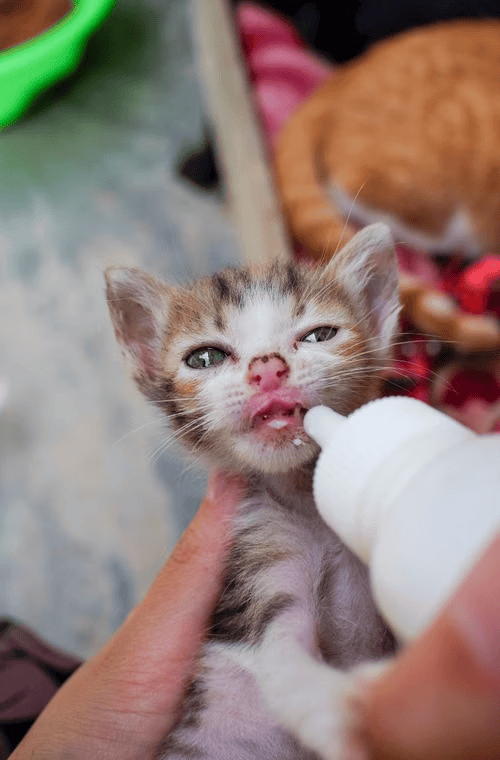
Kittens can begin being introduced to solid food during the weaning period. AAHA notes that kittens can be weaned onto commercially balanced kitten food from approximately 3 to 5 weeks of age.
Very young kittens may initially manage moistened food more easily. By around 8 weeks, many kittens can eat dry kitten food without it being softened, although individual development varies.
When changing from one food to another, a gradual transition over approximately 7 to 10 days can help reduce digestive upset. AAHA guidance also supports gradual dietary transitions.
A simple transition is:
Days 1 to 2: 75% previous food, 25% new food
Days 3 to 4: 50% previous food, 50% new food
Days 5 to 6: 25% previous food, 75% new food
Day 7 onward: 100% new food if your kitten is eating normally and stools remain healthy
If your kitten develops significant vomiting or diarrhoea, or refuses food, contact your vet.
Spotting Overfeeding and Underfeeding Early
Checking Body Condition at Home
Weighing your kitten regularly provides useful information about growth, but weight alone does not provide a complete picture.
Gently feel along the ribs. They should be easy to feel without being visibly prominent. A kitten whose ribs are difficult to feel beneath a noticeable layer of fat may be carrying excess weight.
A sudden change in weight, poor growth, persistent hunger or a significant change in appetite warrants attention.
Do not make substantial calorie changes based on a single weigh-in. Consider the trend over time alongside the kitten’s body condition.
When to Speak to a Vet
A kitten that is not gaining weight steadily, is losing weight, appears unusually hungry despite an appropriate feeding routine or develops a sudden change in appetite should be assessed by a vet.
Young kittens can become unwell quickly, so persistent problems should not be managed solely by repeatedly changing food portions at home.
Measuring Portions the Right Way
A digital kitchen scale is more accurate than measuring by cup.
The reason is straightforward: different kibble shapes and densities can cause the weight of one cup to vary considerably between foods.
For example, two foods can fill the same cup while containing different numbers of calories.
If your food provides:
400 kcal per 100g
and your kitten requires:
240 kcal per day
the calculation is:
240 ÷ 400 × 100 = 60g
This is why measuring food in grams is generally more reliable than estimating a handful or relying solely on volume.
If you only have a measuring cup, use it consistently and compare the amount with the manufacturer’s gram-based feeding recommendation where available.
Should You Follow the Feeding Chart on the Bag?
Yes, but treat it as a starting point, not an exact prescription.
Pet food feeding charts are designed to provide general guidance. They cannot account perfectly for every kitten’s activity level, growth rate, body condition or health status.
Begin with the manufacturer’s recommendation, check the food’s calorie density, and monitor your kitten’s weight and body condition.
If your kitten is gaining weight too quickly or not growing as expected, your vet can help determine whether the portion or the food itself needs to be changed.
Knowing When to Move to Adult Cat Food
Most cats are considered kittens until approximately one year of age. AAHA describes the kitten life stage as birth through 1 year and notes that cats generally require diets appropriate for growth until skeletal maturity.
For many cats, the transition to adult food occurs around 10 to 12 months, although the exact timing may vary.
Large breeds may mature later and may therefore remain on an appropriate growth diet for longer. Your vet can advise when your individual cat is ready.
When changing food, make the transition gradually over approximately 7 to 10 days rather than switching abruptly.
Do not assume that adult food is simply a lower-calorie version of kitten food. Kitten diets are formulated to support growth, so the priority is to choose a complete food appropriate for the cat’s current life stage.
Kitten Dry Food Feeding Mistakes to Avoid
These are mistakes every pet lover should avoid.
1. Free feeding without measuring
Leaving an unlimited bowl available can make it difficult to determine how much your kitten has eaten.
2. Feeding by cup alone
Volume does not indicate how many calories your kitten is receiving. Weighing the food provides greater accuracy.
3. Giving full portions of both wet and dry food
The calories from both foods contribute to the same daily intake.
4. Using adult food during growth
Kittens should normally receive a complete diet formulated for growth until they reach the appropriate stage for adult food.
5. Changing food overnight
A gradual transition is generally easier on the digestive system.
6. Ignoring the calorie information
Two dry foods can have noticeably different energy densities. Check the kcal per 100g or kcal per kg on the packaging where available.
7. Adjusting portions without checking body condition
The appropriate portion is not determined by age alone. Weight, growth, activity level and body condition all matter.
Common Kitten Dry Food Myths, Debunked
Myth: Dry food can be left out all day because it does not spoil quickly
Dry food is easier to leave out than wet food, but that does not mean unlimited access is appropriate for every kitten. Measured portions make intake easier to monitor.
Myth: One cup means the same amount of food for every brand
It does not. Kibble density and calorie content vary between products. The kcal information and gram-based feeding guide for your specific food are more useful.
Myth: Dry food provides enough water by itself
Dry food contains considerably less moisture than wet food, so fresh drinking water should always be available.
Myth: Every kitten of the same age needs the same amount
Age is only one factor. Body weight, growth rate, activity level, body condition and the food’s energy density all influence feeding requirements.
How to Feed Dry Food to a Kitten
- Weigh your kitten regularly during growth.
- Measure dry food in grams where possible.
- Check the kcal per 100g or kcal per kg on the food packaging.
- Use the manufacturer’s feeding guide as your starting point.
- Divide the daily amount into several meals.
- Keep fresh drinking water available.
- Count wet and dry food calories together.
- Monitor body condition rather than relying on weight alone.
- Reassess the feeding amount as your kitten grows.
- Consult your vet or veterinary nurse if growth or appetite seems unusual.
What to Remember
- There is no universal gram amount that is appropriate for every kitten.
- Begin with the feeding guide for your specific food.
- Check the food’s kcal per 100g or kcal per kg.
- Use the calorie formula when you need a more tailored starting estimate.
- The basic gram formula is daily calories ÷ kcal per 100g × 100.
- The RER formula is 70 × body weight in kg^0.75.
- A general veterinary starting estimate for healthy kittens is approximately 2.5 × RER, but individual requirements may vary.
- Divide the daily amount into several meals during early kittenhood.
- Count wet and dry food together when feeding a mixed diet.
- Weigh your kitten regularly and monitor body condition.
- Adjust portions as your kitten grows rather than following one chart indefinitely.
- Consult your vet if your kitten is not growing normally, loses weight, develops persistent digestive problems or experiences a significant change in appetite.
Use the feeding guide on your kitten’s food packaging as a starting point, then adjust portions as your kitten grows. Regularly monitor your kitten’s weight, body condition and appetite to help maintain an appropriate feeding routine.