Is My Puppy Eating Too Much? 9 Warning Signs and What to Do UK 2026
Last Updated: June 2026 | Written to WSAVA & PDSA standards | UK Vet-Approved
Your puppy just ate, and now their belly looks like a little drum. Sound familiar?
Overfeeding is the most common mistake UK puppy owners make. The PDSA PAW Report found that 46% of UK dogs weighed were already overweight or obese, and it almost always starts in puppyhood, one extra scoop at a time.
Overfeeding puppy symptoms are easy to spot once you know what to look for and are completely fixable when caught early. Veterinary standards suggest that understanding correctly how much food puppies need is the most effective way to avoid long-term obesity.
The 9 main overfeeding puppy symptoms are the following:
- Bloated belly
- Loose or watery stools
- Vomiting after meals
- Lethargy after eating
- Rapid weight gain
- Constant begging after meals
- Excessive gas
- Coat and skin issues
- Joint stress in large breeds
Source: Burns Pet Nutrition MRCVS + PDSA PAW Report
What are overfeeding puppy symptoms?
Overfeeding puppy symptoms are physical signals your dog’s body sends when it’s taking in more food than it can properly digest or use.
According to Petland, feeding more than a puppy needs throws off its internal balance and produces symptoms that may seem minor at first but build up over time.
Think of it less as one dramatic event and more as a slow accumulation of small warning signs most owners miss entirely.
The 9 Most Common Signs
Sign 1: Bloated or Distended Belly
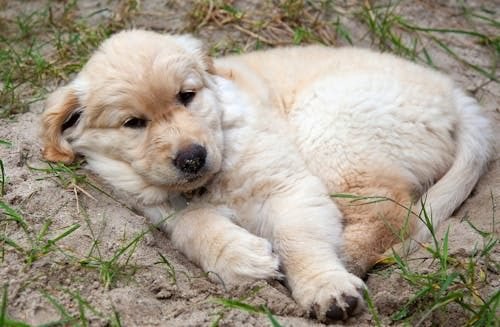
A puppy’s tummy should feel soft and rounded not drum-tight. According to Petland, a persistently swollen belly is one of the most noticeable signs that a puppy is consuming too much food.
If the belly stays tight an hour after eating that’s a red flag.
Sign 2: Loose or Soft Stools
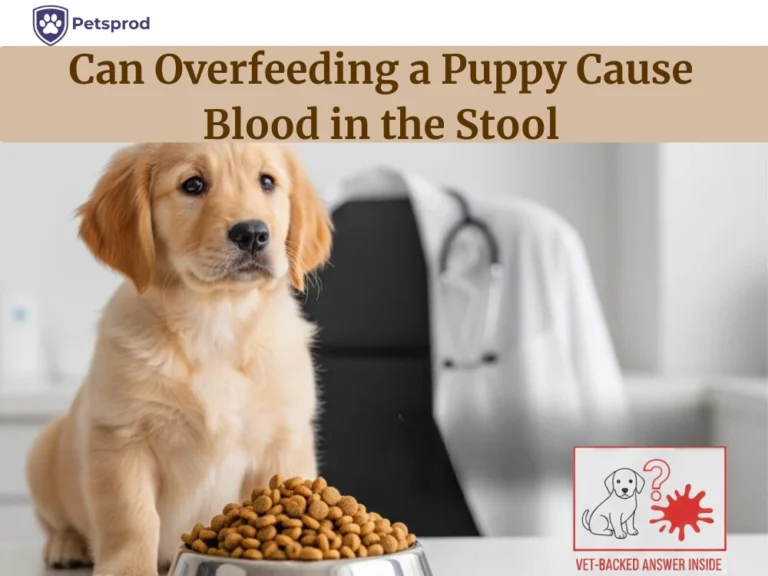
Puppy loose stool from overfeeding is very common. As Pooch and Mutt explain, excess food overwhelms a puppy’s still-developing digestive system causing discomfort, bloating, and inefficient nutrient absorption, often resulting in diarrhoea. When the intestinal lining becomes too inflamed from this constant irritation, it can progress to blood in the stool, a sign that the digestive tract needs immediate rest and tracking.
Burns Pet Nutrition’s veterinary surgeon John Burns MRCVS identifies a specific pattern most owners miss completely:
If this sounds familiar check your portions.
Sign 3: Vomiting Shortly After Meals
Overfed puppies often bring food back up when their stomach hits capacity. K9 Reproduction’s veterinary team lists vomiting as one of the primary signs a puppy is consuming more than its digestive system can handle.
Regurgitation (effortless, straight after eating) usually means too much food too fast. Vomiting with bile means a longer delay worth a vet call.
Sign 4: Lethargy After Eating
A short rest post-meal is normal. But as Cola’s Kitchen explains, overfed puppies that aren’t even overweight yet can feel too full to move or may have stomach discomfort that slows them down significantly.
Lethargy can also signal low blood sugar learn how to recognise and treat hypoglycemia in puppies safely.
Sign 5: Rapid Weight Gain
Young puppies gain between 5 and 10% of their body weight each week under normal circumstances, according to Petlife. If your puppy is consistently exceeding this overfeeding is the most likely cause.
Don’t wait for your vet to mention it. Weigh weekly.
Sign 6: Constant Begging Right After a Full Meal
This sounds counterintuitive but hunger signals can become confused in overfed puppies. The brain’s satiety mechanisms take time to register fullness.
A 2018 international survey cited by Dogster found that approximately 54% of dog owners give their pets more food if they beg and around 22% sometimes feed an extra meal entirely. This alone can push a small puppy significantly over its daily caloric needs.
Sign 7: Excessive Gas and Gurgling
According to Burns Pet Nutrition’s John Burns MRCVS , frequent flatulence that is unusual in smell usually suggests something isn’t right in the digestive system and overfeeding is among the most common causes.
The mechanism is simple: undigested food ferments in the gut, producing gas.
Sign 8:Skin and Coat Issues
In longer-term overfeeding cases, nutritional imbalance begins to affect coat quality. A dull, dry, or flaky coat especially when combined with other symptoms can signal that your puppy’s system is under sustained pressure.
Sign 9: Joint Stress in Larger Breeds
This is the most serious long-term consequence. As Pooch and Mutt (2026) notes, rapid weight gain in puppies puts undue stress on developing joints and bones potentially leading to deformities and long-term mobility problems.
For breeds like Labradors, German Shepherds, and Golden Retrievers this is not a minor concern. Getting weight right in puppyhood directly reduces the risk of hip and elbow dysplasia later.
Signs of Overfeeding in Newborn Puppies
Newborn puppies are a different situation entirely. They cannot regulate their intake the way older dogs can so signs of overfeeding escalate faster and need faster action.

What to Watch in the First Weeks
- Milk coming back through the nose Called milk aspiration this is serious.
According to K9 Reproduction’s veterinary team, if a newborn is fed too fast or too much, liquid can enter the nasal passage. This requires immediate veterinary attention not a wait-and-see approach.
- Excessive tiredness or difficulty waking If a puppy seems excessively drowsy or difficult to rouse for its next feed, the overloaded system may be causing blood sugar levels to drop per Petlife.
- Restlessness and crying after feeding A distended stomach causes discomfort. Petlife notes that crying after a feed is often mistaken for hunger which leads owners to feed more, making the problem significantly worse.
- Diarrhoea in very young pups Overfeeding-related diarrhoea in neonates is dangerous because they dehydrate fast. According to K9 Reproduction, yellow, watery, or very frequent stools need veterinary attention within hours not days.
- A tight, distended abdomen Petlife explains that a newborn puppy’s stomach is tiny it doesn’t take much excess food to distend the abdomen noticeably. A drum-tight belly pressing against the diaphragm can make breathing harder in very young pups. Treat this as an emergency.
Overfeeding and Diarrhoea Why It Happens
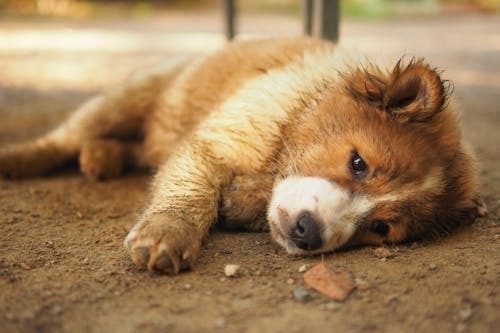
The primary cause of puppy loose stool from overfeeding is enzymatic saturation. A puppy’s gut produces a fixed amount of digestive enzymes. When food volume exceeds this limit, undigested material moves into the large intestine, where it rapidly ferments
Diarrhoea in puppies is a probable consequence of overfeeding, making it one of the most immediate and visible signs of an overloaded digestive tract.
Why Overfeeding Causes Diarrhoea
The gut has a processing limit. When food arrives faster than enzymes and gut bacteria can handle it, undigested material ferments in the intestine.
How Long Does It Last?
Mild loose stools from simple overfeeding usually settle within 24 to 48 hours once you correct the portion size provided your puppy is otherwise bright, drinking, and behaving normally.
Call your vet immediately if:
- Diarrhoea continues beyond 48 hours
- Stools contain blood
- Your puppy becomes flat or lethargic
- Your puppy is under 8 weeks old
Other Digestive Symptoms
Flatulence: The fermentation process produces gas. Frequent, unusually smelly gas is one of the key overfeeding warning signs identified by Burns Pet Nutrition .
Gastric dilation: In larger breeds, rapid eating and overfeeding can contribute to bloat a potentially life-threatening condition. Darwin’s Pet, citing Cornell University College of Veterinary Medicine: identifies a swollen abdomen, restlessness, or unsuccessful vomiting as emergency warning signs of GDV. Rare in puppies but important to know.
How Do I Know If I’m Overfeeding My Puppy?
The honest answer: most people are slightly overfeeding without realising it.
Feeding guidelines on food packaging are deliberately generous and treats are almost never factored in. A international survey cited by Dogster found that 54% of owners give more food if their pet begs and 22% sometimes feed an extra meal entirely.
The Body Condition Score Tool
Vets use a 1 to 9 body condition score (BCS) scale where 4 to 5 is ideal. The PDSA recommends this as the standard method for assessing healthy weight.
You can do a simplified version at home right now:
- Rib check Run your fingers gently along your puppy’s ribcage. You should feel the ribs easily without pressing hard but they shouldn’t be sticking out sharply.
- Waist check Look down at your puppy from above. Behind the ribcage, you should see a slight waist not one straight sausage-like shape. A widening, barrel-shaped middle often means too much food.
- Tuck check View your pup from the side. The belly should tuck up slightly behind the ribs not hang straight or sag downward.
How Much Should You Actually Feed a Puppy?
Calories Matter More Than Volume
Different foods have completely different calorie densities. A cup of raw food is not the same as a cup of dry kibble.
Always check the kcal per 100g on your food packaging and cross-reference with your puppy’s target weight not their current weight if they’re already overweight.
Treats Count More Than Most People Think
The 10% Treat Rule (WSAVA):
According to WSAVA, treats should account for no more than 10% of a dog’s total daily calorie intake.
A 3kg puppy may need only 200 kcal per day total. A handful of training treats can easily account for 60–80 kcal of that allowance. The PDSA PAW Report found that 28% of vets attributed rising pet obesity specifically to excess treats.
Factor treats in. Every single day.
What to Do If You’ve Overfed Your Puppy
It happens even experienced owners overfeed sometimes. The key is acting calmly and correctly rather than panicking or overcorrecting.
Immediate Steps
- Skip the next meal if your pup has vomited or has diarrhoea Give their gut a short rest around 4 to 6 hours with free access to fresh water. Then offer a small bland meal.
- Plain boiled chicken with white rice is the standard veterinary recommendation for settling an irritated puppy gut per K9 Reproduction (2024) and VCA Animal Hospitals.
- Don’t cut portions dramatically overnight Sudden restriction causes stress and food anxiety. Reduce by 10 to 15% over a few days instead.
- Watch for dehydration Gently pinch the skin on the back of the neck. It should spring back immediately. If it stays tented even briefly contact your vet.
- Rebase your portions properly VCA Animal Hospitals point out that bag guidelines are only a starting point and many puppies need less than the label suggests, especially once treats are factored in.
What to Do If Puppy Overfed
- Hold the next meal 4–6 hours if vomiting or loose stool water only
- Reintroduce food gently boiled chicken and white rice in small portions
- Reduce portions by 10–15% over 3–5 days never cut overnight
- Pinch neck skin to check hydration if it stays tented, call your vet now
Your Puppy Can’t Tell You But Now You Know
Overfeeding a puppy is easy to do and easy to fix when you catch it early.
Start with the rib check today. Weigh your puppy this week. Count every treat.
And if something feels off your vet is always the right call.
- Do the rib, waist, and tuck check today
- Count every treat in your daily calorie total
- Keep a 7-day feeding diary you’ll be surprised what you find
Getting this right early is one of the most important things you can do for your puppy’s long-term health.
Overfeeding Questions Answered
What are the main overfeeding puppy symptoms?
The 5 main overfeeding puppy symptoms are a bloated belly, loose or watery stools, vomiting after meals, lethargy, and rapid weight gain. According to Petland, overfeeding throws off a puppy’s internal balance, creating digestive pressure that builds up over time. If your puppy exhibits two or more of these symptoms consistently, you should immediately review their daily food portions and consult your vet.
How do I know if I’m overfeeding my puppy?
The most reliable way to know if you are overfeeding is by performing a rib check and body condition assessment. You should be able to feel your puppy’s ribs easily under their coat without pressing hard, see a visible waistline when looking from above, and notice a slight belly tuck from the side. John Burns MRCVS notes that if you have to press firmly to feel the ribs or if the waistline disappears completely, your puppy is entering overfeeding territory.
Can overfeeding cause diarrhoea in puppies?
Yes, overfeeding is one of the leading causes of acute puppy diarrhoea. Pooch and Mutt explains that excess food quickly overwhelms a puppy’s sensitive, still-developing digestive tract. This overload results in inefficient nutrient absorption, forcing the gut to fast-track food out as loose or watery stools. Reducing their total daily portion size by 10–15% usually resolves mild, diet-induced cases within 24 to 48 hours.
What are signs of overfeeding in a newborn puppy?
Signs of overfeeding in newborn puppies include excessive crying after feeds, a tight or hard distended belly, milk bubbling from the nose, and watery yellow stools. K9 Reproduction’s veterinary team warns that newborn puppies can dehydrate rapidly from digestive upset; therefore, these early signs require immediate veterinary attention rather than a wait-and-see approach.
How quickly should I reduce food if I’ve been overfeeding?
You should reduce your puppy’s food portion gradually by 10% to 15% spread over 3 to 5 days. Sudden, drastic cuts in food portions can trigger nutritional stress, resource guarding, or food anxiety. However, if your puppy is actively experiencing vomiting or diarrhoea, switch them to a veterinary-approved bland diet for 24 to 48 hours before gradually introducing the newly corrected normal food amounts.
What food is best after overfeeding symptoms appear?
The best food to settle an irritated puppy gut after overfeeding is a bland diet consisting of plain boiled chicken breast and white rice (with no oils, salts, or spices). This is the standard restorative diet recommended by UK vets because it is highly digestible. Feed this bland mix in small, frequent portions every few hours until your puppy’s bowel movements return to normal.
Sources: PDSA Animal Wellbeing Report 2024 | Burns Pet Nutrition MRCVS | K9 Reproduction Veterinary Team | WSAVA Global Nutrition Guidelines | VCA Animal Hospitals | Pooch and Mutt