Puppy Feeding Schedule by Age: What UK Vets Recommend (2026)
Last Updated: June 2026 | This guide was prepared by the PetsProd editorial team based on published guidance from the PDSA, the British Veterinary Association, The Kennel Club UK, and the Merck Veterinary Manual.
Why Timing Trumps Ingredients in Puppy Nutrition
When bringing a new dog home, pinpointing the correct puppy feeding schedule by age is just as critical as choosing high-quality kibble. New owners constantly worry about how much to feed to avoid under or overnutrition during these vital early months.
A puppy’s stomach at eight weeks old is roughly the size of a walnut. Because it physically cannot hold massive portions, guessing meal times or free-feeding triggers severe health issues.
- In Small Breeds: Feeding too infrequently causes dangerous blood sugar crashes (hypoglycaemia).
- In Large Breeds: Oversized, erratic meals force rapid weight spikes that permanently damage underdeveloped skeletal joints.
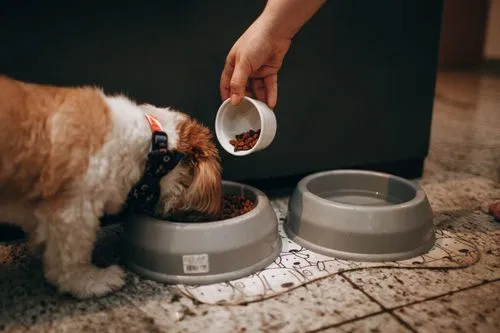
A strict routine removes all the guesswork around mealtimes. Beyond keeping their energy levels steady, a fixed schedule is your best shortcut to quick housebreaking. Because puppies naturally need a toilet break 15 to 20 minutes after eating, feeding them at the exact same times means you can accurately predict when to take them outside.
Why the Feeding Schedule Matters as Much as the Food Itself
While choosing high-quality kibble is vital, when you serve it is equally important. A puppy’s nutritional needs are tied directly to their metabolic clock.
- Small Stomachs, High Energy: An 8-week-old puppy is building bone density and neural pathways at an intense rate. However, their stomach is only the size of a walnut. They physically cannot hold enough fuel in one or two sittings to power 24 hours of growth.
- The Danger of Gaps: Feeding too infrequently causes blood sugar to drop (hypoglycaemia), which is a medical emergency for small and toy breeds.
- Avoiding Digestive Stress: Overloading the gut with large portions leads to vomiting, loose stools and, in large breeds, unhealthy weight spikes that stress developing joints.
- The Potty Training Shortcut: Puppies typically need to eliminate 15–20 minutes after eating. A consistent schedule makes their toilet routine predictable, whereas “free feeding” (leaving food out all day) makes housebreaking almost impossible.
How Much Should I Feed My Puppy? Portions and Grams Explained
Getting portions right from the start makes a real difference. Knowing how much to feed a puppy by weight and age removes the guesswork entirely.
Determining the exact amount of food to put in the bowl requires looking beyond age charts and focusing heavily on your puppy’s target adult size. Balancing their daily intake is the only way to prevent developmental growth issues.
Three Factors That Determine Portion Size
- Expected Adult Weight: You must feed for the size your puppy will become, not what they weigh today. A 10-week-old Labrador has completely different caloric needs than a 10-week-old Chihuahua.
- Breed Size Category: Small breeds require frequent, calorie-dense meals due to fast metabolisms. Large breeds need controlled-growth formulas to prevent growing faster than their bones can safely support.
- Activity and Growth Spurts: High active puppies or those experiencing a sudden growth spurt naturally burn more calories and require temporary portion adjustments.
Why Measuring in “Cups” Fails UK Owners
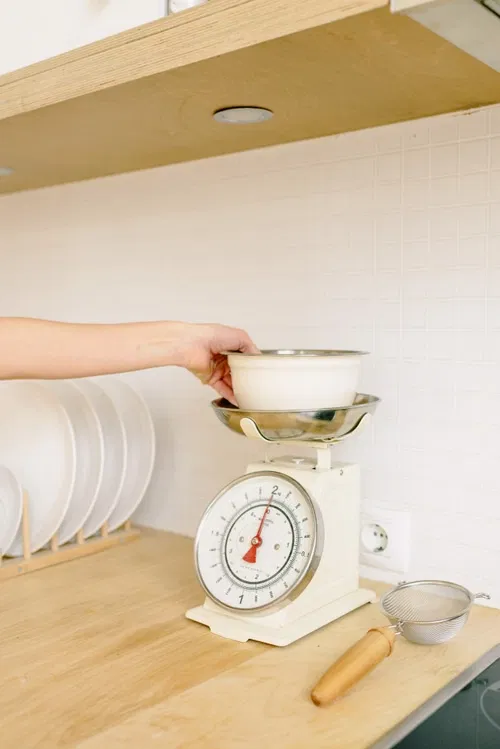
Using “cups” as a measurement leads to dangerous overfeeding or underfeeding. Calorie density varies heavily by brand one premium cold-pressed kibble might have 420 kcal per 100g, while a supermarket brand contains only 320 kcal. That difference changes the gram amount substantially.
Always weigh food in grams using a digital kitchen scale. Find the specific kcal/100g figure on your packaging and stick strictly to the manufacturer’s feeding guidelines as a baseline. Adjust based on your puppy’s body condition, not on whether they appear to want more.
The 30-Second Rib Test
Instead of relying purely on charts, use this quick manual check to assess your puppy’s body condition:
Ideal Weight: You should easily feel the ribs under a thin layer of skin, but they should not be visibly poking out. From above, you should see a clear waist narrowing behind the ribcage.
Underweight: Ribs are sharply visible. Increase their daily food allowance by 10% and recheck in ten days.
Overweight: You cannot feel the ribs without pressing hard. Reduce their daily portion by 10% to protect their joints.
Large breed puppies often remain on puppy food for 15 to 24 months to allow this slower, controlled development. Switching them to adult food too early removes the nutrient ratios their growing bones still need.
Portion sizes vary between breeds and life stages. For further guidance on how much to feed your dog at each stage, refer to the PDSA Dog Feeding Guide.
How Often Should a Puppy Be Fed for Optimal Growth
Meal frequency is a biological requirement, not a lifestyle preference. A puppy’s digestive system at eight weeks cannot handle large infrequent meals. Smaller, regular meals maintain stable blood sugar, support steady digestion and reduce the risk of vomiting, loose stools and bloat.
According to the VCA Animal Hospitals guide on feeding growing puppies, providing meals at regular intervals allows for steady growth and helps with housebreaking, as puppies usually need to eliminate shortly after eating.
Expert Tip:
Feed at the same time every day. Consistency regulates the digestive tract and makes toilet training predictable. Slight adjustments of 30 to 60 minutes are fine if your schedule changes, but large gaps or skipped meals should be avoided, particularly in the first few months.
Feeding frequency affects digestion, energy levels and toilet training. The Royal Kennel Club provides practical advice on meal timing and portion control for growing puppies.
Puppy Feeding Schedule by Age: The Complete 0 to 12 Month Breakdown
Puppy’s first year is a marathon of development. They will do most of their growing in these twelve months, but that growth happens in distinct stages. Understanding this timeline helps you transition their food gradually, avoiding the “tummy troubles” that come with sudden changes.
0 to 4 Weeks: The Nursing Phase
At this stage, nutrition comes entirely from the mother’s milk or a vet-approved canine milk replacer. Feeding is strictly on demand.
4 to 8 Weeks: The Weaning Phase
This phase marks the transition to solid food by introducing “puppy mush” high quality puppy kibble soaked in warm water to a porridge consistency.
Nutritional Rule: Always use formulas specifically labeled for puppies or “all life stages”. Adult dog food lacks the critical protein and DHA levels required for this rapid development.
The Process: Offer mush 3 to 4 times daily alongside nursing.
The Goal: By week six, most puppies eat solid food primarily. By week eight, they should be fully weaned onto a 4-meal-a-day solid food schedule.
2 to 4 Months: The Peak Growth Phase
This is the most nutritionally demanding window where puppies build muscle and bone at their fastest rate. To fuel this growth without overloading their small stomachs, maintaining 4 meals a day is essential.
A practical daily schedule for UK households:
- 7:00 am: Breakfast (offered after the morning toilet break)
- 11:00 am: Mid-morning meal
- 3:00 pm: Afternoon meal
- 7:00 pm: Evening meal (served at least 3 hours before bedtime)
Leaving a 3-hour gap before bedtime allows the stomach to empty, significantly reducing overnight toilet accidents and preventing digestive discomfort during sleep.
4 to 6 Months: The Teething Phase
As adult teeth push through, chewing hard kibble can become painful. Simply soften the food with a little warm water to make mealtimes comfortable. There is no need to change the food type or reduce portions.
Puppies naturally transition to 3 meals a day between 10 and 14 weeks. Watch for the signal: if they consistently ignore one specific meal but finish the others enthusiastically, they are ready to drop that meal and redistribute those grams across the remaining servings.
6 to 12 Months: The Transition Phase
Growth begins to slow down during this window. While medium breeds approach their adult height around 9 months, large and giant breeds continue growing well past 12 months.
By 6 months, you can safely transition to 2 meals a day. Divide the exact same daily gram allowance into two portions rather than cutting down the food, unless the manual rib test indicates they are gaining excess fat.
Vet Insight:
According to the Merck Veterinary Manual, feeding a high quality balanced diet during these specific growth windows is the most effective way to prevent nutritional deficiencies that affect a dog throughout its life.
Practical Notes for a Smooth Routine
When transitioning between meal frequencies, redistribute the same daily gram total across fewer meals. Do not reduce the overall amount unless body condition assessment suggests overfeeding.
Changing Food Brands (The Seven-Day Transition Method)
To avoid digestive upset, always transition to a new food brand gradually over a full week rather than switching immediately:
- Days 1 and 2: 75 percent old food, 25 percent new food
- Days 3 and 4: 50 percent old food, 50 percent new food
- Days 5 and 6: 25 percent old food, 75 percent new food
- Day 7 onwards: 100 percent new food
Faster transitions frequently cause digestive distress and loose stools.
Fresh Water Requirements
Fresh water should be available at all times. Unlike food, water intake should never be restricted or scheduled. A rough guideline is 50ml of water per kilogram of body weight per day, though this volume increases significantly with physical activity and warm weather.
Small Breed vs Large Breed Puppies: Why the Rules Are Different
Size is not just a physical characteristic. It determines metabolic rate, stomach capacity, risk profile and the specific nutritional ratios a puppy needs. Feeding a Toy Poodle the same way you would feed a German Shepherd puppy creates health problems for both.
Small Breed Feeding Needs: High Energy, Tiny Stomachs
Small and toy breeds burn through energy at a rate that is disproportionately fast relative to their body weight. A Chihuahua, Yorkshire Terrier or Pomeranian cannot eat enough food in two sittings to sustain their energy requirements through the day.
The primary risk for these breeds is hypoglycaemia, a sudden and dangerous drop in blood sugar. According to the PDSA , small and toy breed puppies require strict and frequent feeding intervals because their underdeveloped livers cannot store sufficient glycogen between meals.
Key points for small breed feeding:
- Four meals per day should continue until at least five to six months of age.
- Some very small individuals, particularly toy breeds under 2kg at adult weight, benefit from five small meals during the first two to three months.
- Meal size is less important than meal frequency at this stage.
- Missing even one meal can trigger a hypoglycaemic episode in vulnerable individuals.
Symptoms of hypoglycaemia in puppies include trembling, lethargy, glassy eyes, disorientation and in severe cases, seizures. This is a veterinary emergency. If you see these signs, contact your vet immediately.
Small breeds also reach adult size earlier than large breeds, typically by nine to ten months, which means the transition to adult food and a two-meal schedule happens sooner.
Large Breed Feeding Needs: Controlled Growth Is the Goal
For large and giant breeds, the concern is not underfeeding. It is overfeeding. Rapid weight gain in large breed puppies causes bones to grow faster than the joints can support. This is one of the leading environmental contributors to hip dysplasia, elbow dysplasia and other developmental orthopaedic conditions.
According to the PetMD guide on feeding large breed puppies, overnutrition and rapid weight gain are the primary environmental risk factors for skeletal diseases including hip dysplasia in larger breeds.
Key points for large breed feeding:
- Use food specifically labelled for large breed puppies. These formulas contain controlled levels of calcium, phosphorus and calories.
- Do not supplement with extra calcium. A complete large breed puppy food contains the correct mineral ratio. Adding supplements disrupts this balance and can worsen skeletal outcomes.
- Transition to three meals can happen earlier than for small breeds, often by four to five months.
- Avoid vigorous exercise for at least one hour after meals to reduce bloat risk.
According to The Kennel Club UK, feeding smaller more frequent meals and restricting exercise after eating are key preventive measures for gastric dilatation-volvulus (GDV) in breeds predisposed to the condition.
Puppy Feeding Problems and What to Do About Them
Feeding a puppy isn’t always as simple as “set it and forget it.” From vacuum-like eating habits to sudden tummy troubles, you are bound to face a few hurdles. Knowing which issues are minor and which require a vet visit will save you a lot of stress.
Eating Too Fast and Gulping
Rapid eating causes air ingestion, which leads to vomiting shortly after meals and significantly increases bloat risk in larger breeds. Use a slow feeder bowl with built-in obstacles that force your puppy to eat around patterns rather than inhaling the food. Alternatively, spread the kibble across a flat baking tray. Both methods slow eating without changing portion size.
Vomiting Yellow Foam in the Morning
Yellow foam vomit is bile and almost always means the stomach has been empty for too long overnight. The fix is straightforward: offer a small tablespoon of kibble as a late evening snack after the main evening meal. This absorbs overnight stomach acid and typically eliminates the morning vomiting within two to three days.
Loose Stools After a Food Change
Loose stools following a recent food transition mean the switch happened too quickly. Revert to a higher proportion of the original food and extend the transition to ten to fourteen days instead of seven. If loose stools persist beyond 48 hours or there is any blood present, contact your vet.
Refusing Food at Mealtimes
One skipped meal in an otherwise healthy, energetic puppy is not an emergency. Put the bowl down, allow 15 minutes and then remove it regardless of how much was eaten. Do not offer treats or alternatives. They will be hungry at the next meal. If your puppy skips two consecutive meals or shows lethargy alongside food refusal, then visit your pet clinic.
Eating Grass and Vomiting
Occasional grass eating is normal behaviour and typically indicates mild stomach irritation. It does not require action on its own. If it happens frequently or is followed by persistent vomiting, a vet check is worthwhile to rule out parasites or a dietary sensitivity.
According to the VCA Animal Hospitals Guide on Puppy Digestive Health, internal parasites and viral infections like Parvovirus are common causes of digestive upset in young dogs, making veterinary screening essential.
Treats, Training Rewards and the 90/10 Rule
Training a puppy requires a lot of “currency” (treats!), but those calories add up faster than most owners realize. To keep your puppy healthy and ensure they grow correctly, you must balance their enthusiasm for rewards with their actual nutritional needs. Training a puppy requires consistent rewards and those rewards carry a hidden calorie cost. The 90/10 rule, recommended by PetMD and followed by most UK vet nutritionists, states that no more than 10 percent of a puppy’s daily calorie intake should come from treats. The remaining 90 percent must come from their complete and balanced food.
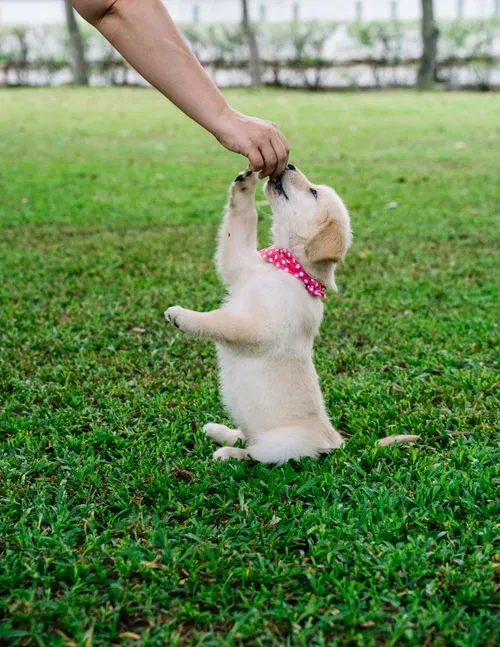
For a medium breed puppy consuming 900 kcal per day, that is 90 kcal available for treats. A single commercial training biscuit can contain 25 to 100 kcal. Three biscuits during one training session can exhaust the entire day’s treat allowance.
Practical approaches that avoid accidental overfeeding:
The kibble swap method: take a measured portion of the daily food allowance, place it in a treat pouch before breakfast and use individual pieces as rewards throughout the day. Calorie total stays accurate because you are using food already counted.
For high-value situations such as recall training or new environments, use small pieces of plain boiled chicken, plain hard cheese or freeze-dried meat. These are more motivating than kibble for difficult tasks. When used, subtract the approximate calories from the next main meal.
Treat size does not matter to a puppy. They respond to scent and the act of receiving something. Break all treats into pieces no larger than a pea.
Foods That Are Toxic to Puppies
Puppies explore with their mouths. Many common household foods that are harmless to humans cause serious or fatal reactions in dogs. Because puppies are small and their organs are still developing, even a small amount of the wrong food can become a medical emergency.
High risk foods to store completely out of reach:
- Chocolate: Contains theobromine and caffeine which puppies cannot metabolize. Dark and baking chocolate are highly dangerous. Watch for vomiting, restlessness, rapid breathing, abnormal heart rhythms, or seizures.
- Xylitol (Artificial Sweetener): Found in sugar-free gum, some peanut butters, and baked goods. Even tiny doses trigger a life-threatening drop in blood sugar and irreversible liver failure within 72 hours.
- Grapes and Raisins: Cause acute kidney failure. Because there is no established safe dose, a single grape or raisin can be fatal to some puppies.
- Onions, Garlic, Leeks, and Chives: Any form (raw, cooked, or powdered) destroys red blood cells, causing hemolytic anemia. Store-bought stock cubes and gravies are common accidental sources.
- Cooked Bones: Cooking makes bones brittle, causing them to splinter into sharp fragments that can lacerate the puppy’s throat, stomach, or intestinal walls.
- Macadamia Nuts: Rapidly induce severe muscle weakness, vomiting, tremors, and a dangerously high body temperature.
Safety Reminder: Always store these ingredients on high shelves or inside secure cupboards completely out of your puppy’s physical reach.
If you suspect your puppy has eaten any of these, do not wait for symptoms to appear. Contact your vet and call.
Expert Tips for a Reliable Feeding Routine
Mastering your puppy’s nutrition takes more than just the right food; it takes the right habits. These vet-approved tips and answers to common questions will help you navigate the daily routine with confidence.
- Feed at the same time every day. A predictable schedule regulates digestion and makes toilet training significantly easier because you can predict when your puppy needs to go outside.
- Use a kitchen scale rather than a measuring cup. Volume measurements are not reliable across different kibble sizes and densities. Weighing in grams takes the same amount of time and is far more accurate.
- Check the AAFCO statement on your food packaging. It should state that the food is complete and balanced for the growth stage or for all life stages. Foods that say maintenance only are not appropriate for puppies.
- Do not add supplements to a complete puppy food unless your vet has specifically recommended it. Extra calcium in particular can disrupt the mineral balance in large breed puppy food and contribute to the skeletal problems the food was formulated to prevent.
- If your puppy consistently eats everything and then looks for more, or whines near the food cupboard between meals, check body condition and consult the feeding chart. Appetite increases during growth spurts are normal and sometimes warrant a temporary portion increase.
When to Switch to Adult Food
The timing depends entirely on breed size.
- Small breeds (expected adult weight under 10kg) switch to adult food at 10 to 12 months.
- Medium breeds (10kg to 25kg) switch at 12 months.
- Large breeds (25kg to 45kg) stay on puppy food until 15 to 18 months.
- Giant breeds (45kg and over, such as Great Danes and Saint Bernards) often need puppy formula until 18 to 24 months. Their skeletal development continues well beyond the point where they look fully grown.
Switching too early removes the specific nutrient ratios that growing bones still require. If you are unsure when your puppy qualifies as fully grown, your vet can assess bone development at a routine checkup.
Building a Healthy Feeding Routine That Lasts
A consistent feeding schedule is one of the most practical things you can do for your puppy’s long-term health.
For small and toy breeds, frequency is the priority. Never skip a meal and know the signs of hypoglycaemia so you can act immediately.
For large breeds, controlled portions and breed-specific food are the priority. Rapid weight gain causes problems that cannot be undone.
Use this guide as your baseline, cross-reference with your food brand’s chart and confirm portions with your vet at every vaccination visit.
Small breeds switch at 10 to 12 months, medium breeds at 12 months, large breeds at 15 to 18 months, and giant breeds require puppy formula until 18 to 24 months. The transition must be done gradually over seven days using the structural brand-switching method to prevent severe digestive upset.
No. Free-feeding makes it impossible to monitor exact daily caloric intake, risks overeating or obesity, and eliminates the predictable digestive timeline required for successful housebreaking. Authoritative bodies like the PDSA strongly recommend structured mealtimes where the bowl is removed after a set window.
No, this is unsafe at eight weeks old. A young puppy’s stomach is too small to hold enough food in just two sittings to power their growth, which can trigger severe blood sugar drops (hypoglycemia), especially in toy breeds. Four meals a day is the medically appropriate starting point until at least three months of age.
No. Large breed hunger signals are completely unreliable guides for portion control. Feeding them to appetite causes rapid weight spikes that force their bones to grow faster than their skeletal joints can safely support, significantly increasing the risk of developmental hip or elbow dysplasia. Always stick strictly to the weight charts and manual body condition checks.
- PDSA Pet Health Hub: Puppy Feeding Guide (pdsa.org.uk)
- British Veterinary Association: Puppy Nutrition Guidance (bva.co.uk)
- The Kennel Club UK: Feeding Your Puppy Standards (thekennelclub.org.uk)
- Merck Veterinary Manual: Nutritional Requirements of Small Animals (merckvetmanual.com)
- Purina Institute: Developmental Orthopaedic Conditions (purinainstitute.com)
- VCA Animal Hospitals: Feeding Growing Puppies Clinical Guide (vcahospitals.com)
- Blue Cross UK: What to Feed Your Puppy (bluecross.org.uk)
- WSAVA Global Nutrition Committee: Global Nutrition Guidelines (wsava.org)



2 Comments