Puppy feeding schedule by age is one of the most important things to manage as a new pet parent. Let’s be honest, bringing home a new puppy is a whirlwind of joy and tail wags, but it also comes with plenty of “ what now?” moments. Among all the excitement, the biggest worry for most of us is simply getting the feeding routine right.
It’s not just about keeping their bellies full. How many times a day you feed them and exactly what goes into their bowl directly impacts their development. Proper nutrition in these early months is what builds strong bones, boosts the immune system, and sets the foundation for a long, healthy life.
Since every puppy is different, nutritional needs vary based on age and breed. This is why choosing specially formulated puppy food with essential nutrients like protein, calcium, and DHA is crucial. Adult dog food is not suitable for puppies because their digestive systems are still developing and require age-specific nutrition.
One of the biggest challenges new pet owners face is deciding portion sizes and feeding frequency. To make this easier, we’ve created detailed guides on how much to feed and how often be fed . Combined with a structured feeding schedule, these resources will help you build a balanced routine that supports healthy development.
How Much Should I Feed My Puppy? (Portions & Calories Explained)
“How much is too much?” This is the million-dollar question for every new pet parent. Finding the right balance is critical because a puppy’s nutritional needs are vastly different from an adult dog’s. Feeding too little can stunt their development, while overfeeding can lead to painful joint issues and obesity later in life.
To get the portion size right, isn’t just beyond a bowl, it’s about understanding puppy needs and supporting healthy.
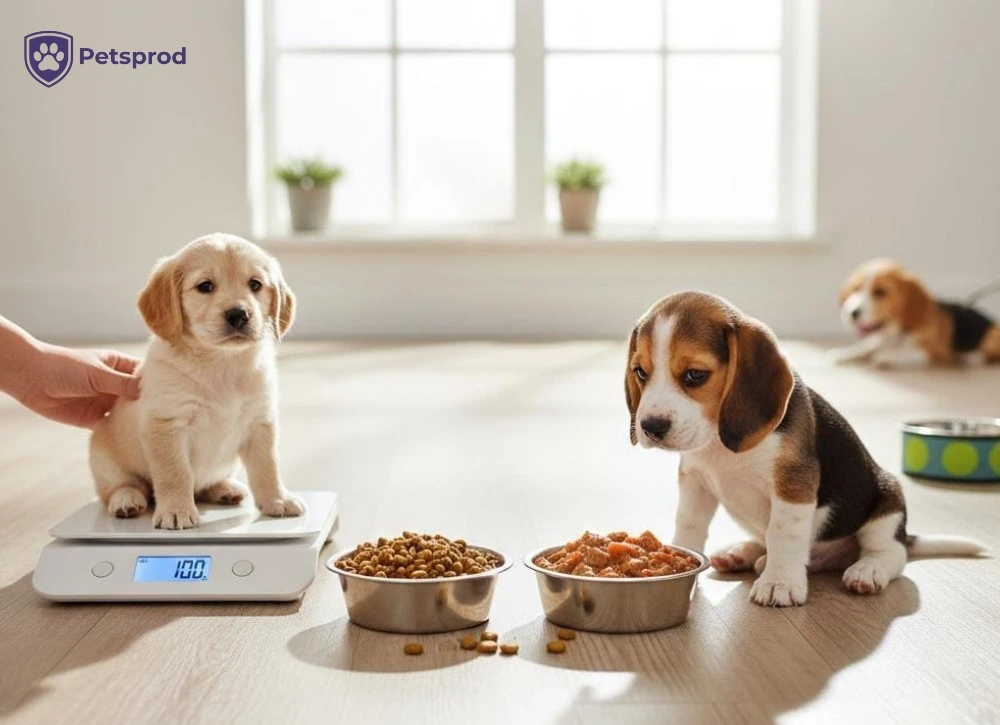
What Determines Portion Size?
Several factors determine how much your puppy should eat:
-
Age vs. Expected Adult Weight
You don’t feed a puppy solely based on current weight. Instead, focus on the expected adult weight, because growth requirements differ dramatically. For example, a Golden Retriever puppy expected to reach 70 lbs will need far more calories than a Chihuahua puppy that will top out at 10 lbs
-
Breed Size Importance
Small breeds have fast metabolisms and small stomachs, requiring frequent, calorie-dense meals. Large breeds need controlled-growth formulas to ensure their bones and joints develop properly and avoid orthopedic issues.
-
Activity Level
Active puppies burn more energy than those who prefer lounging. Just like humans, a “fetch enthusiast” puppy will need more calories than a couch potato pup.
Vet Insight:
According to the Purina Institute – Developmental Orthopedic Conditions,
” Large and giant breed puppies should be fed diets with controlled calorie, fat, and calcium levels to support slower skeletal growth and reduce the risk of developmental orthopedic diseases. Feeding plans should consider body weight, growth rate, and breed-specific nutrient requirements.”
Calorie Basics: Why “Cups” Can Be Deceptive
Many owners assume that one cup of food is the same across all brands. In reality, Calories ≠ Volume. One brand might have 350 calories per cup, while another has 500. Always check the “kcal/kg” info on the package, and use the feeding chart on the bag as your baseline. Adjust portions based on your puppy’s growth and body condition.
Expert Tips – The Rib Test
You should be able to feel your puppy’s ribs under a thin layer of skin, but they shouldn’t be poking out visibly. If you have to dig through a thick layer of fat to find them, it’s time to slightly reduce the portion size.
Daily Calorie Estimations by Weight
These are general estimates individual needs may vary by up to 50% depending on metabolism, activity, and growth. Always consult with a vet for a personalized plan.
Expected Adult Weight |
2 – 4 Months (Calories / Day) |
5 – 8 Months (Calories / Day) |
9 – 12 Months (Calories / Day) |
|---|---|---|---|
| Toy Breed (5–10 lbs.) | 200 – 450 kcal | 150 – 350 kcal | Transition to Adult |
| Small Breed (10–25 lbs.) | 450 – 900 kcal | 400 – 800 kcal | 350 – 700 kcal |
| Medium Breed (25–55 lbs.) | 900 – 1600 kcal | 800 – 1400 kcal | 700 – 1200 kcal |
| Large Breed (55–90+ lbs.) | 1800 – 2600 kcal | 1500 – 2200
kcal |
1200 – 1800 kcal |
Note:
Large breed puppies often remain on puppy food longer, sometimes up to 15 – 24 months, to allow slower skeletal growth and reduce orthopedic risks, as advised by Purina Institute.
How Often Should a Puppy Be Fed for Optimal Growth?
Determining how many times a day to fill the bowl is just as important as what goes inside it. Unlike adult dogs, who often thrive on one or two meals, puppies have “tiny engines” that burn fuel at an incredible rate. Establishing a consistent feeding frequency isn’t just about discipline; it’s a biological necessity for their developing bodies.
Feeding Frequency by Age: Why Timing Matters
Puppies have small stomachs but massive energy requirements. If they go too long without eating, they risk more than just a “grumbling tummy”- they risk physical health complications.
-
The “Tiny Tank” Logic:
A puppy’s stomach is about the size of a walnut at 8 weeks. They simply cannot hold enough food in one sitting to power their growth for 24 hours.
-
Digestion Stability:
Frequent, smaller meals are easier on a developing digestive system, reducing the risk of gas, diarrhea, and the dreaded “food bloat.”
Risks of Under-feeding & Over-feeding
Feeding frequency acts as a safety net for your puppy’s health:
-
Hypoglycemia (Low Blood Sugar):
Small and toy breeds are especially prone to sugar crashes. Frequent meals ensure a steady supply of glucose to the brain and muscles.
-
Digestive Upset:
Overfeeding in a single sitting can overwhelm the gut, leading to vomiting or loose stools.
-
Skeletal Stress:
Over-feeding (too many calories too fast) can cause a puppy to put on weight faster than their bones can support.
Vet Insight:
According to the VCA Animal Hospitals Guide on Feeding Puppies, providing meals at regular intervals allows for steady growth and helps in housebreaking, as puppies usually need to eliminate shortly after eating.
Ideal Feeding Frequency & Timing
Maintaining a predictable routine helps with both metabolic health and potty training.
Puppy Age |
Meals Per Day |
Suggest Timing |
|---|---|---|
| 6 – 12 Weeks | 4 Meals | 7 am, 11 am, 3 pm, 7 pm |
| 3 – 6 Months | 3 Meals | 8 am, 1 pm, 6 pm |
| 6 – 12 Months | 2 Meals | 8 am, 6 pm |
| 12 + Months | 1 – 2 Meals | Morning & Evening |
Expert Tip:
Try to feed your puppy at the same time every day. This consistency regulates their digestive tract, making it much easier to predict when they will need a potty break, which is a lifesaver during the crate training phase!
Puppy Feeding Schedule by Age (0–12 Months Complete Chart)
Puppy’s first year is a marathon of development. They will do most of their growing in these twelve months, but that growth happens in distinct stages. Understanding this timeline helps you transition their food gradually, avoiding the “tummy troubles” that come with sudden changes.
Age-Wise Breakdown: What to Expect
0–4 Weeks (The Nursing Phase)
At this stage, nutrition is simple: mother’s milk or a vet-approved canine milk replacer. Their digestive systems are not yet equipped for solid proteins or fibers.
4–8 Weeks (The Weaning Phase)
This is the bridge between milk and solid food. You start by introducing “puppy mush” (kibble soaked in warm water or formula). By week 8, they should be fully eating solid puppy food.
2–3 Months (The Growth Spurt)
This is the most demanding phase. Puppies are incredibly active and their bodies are building muscle and bone at peak speed.
4–6 Months (The Teething Phase)
You might notice your puppy “fussing” with their food. Their adult teeth are coming in, making hard kibble a bit painful. You can soften their food slightly with warm water to help them stay on track.
6–12 Months (The Transition)
Growth begins to slow down as they approach their adult height. This is the period where you slowly shift from three meals a day to two.
Vet Insight:
According to the Merck Veterinary Manual, feeding a high-quality, balanced diet during these specific growth windows is the most effective way to prevent nutritional deficiencies that can affect a dog for the rest of its life.
Main Schedule Table: 0–12 Months Roadmap
Puppy Age |
Primary Food Type |
Meals Per Day |
Key Developmental Focus |
|---|---|---|---|
| 0–4 Weeks | Mother’s Milk / Formula | On Demand | Immunity & Warmth |
| 4–8 Week | Gruel (Softened Kibble) | 4 | Weaning & Socialization |
| 2–4 Months | High-Protein Puppy Food | 4 | Brain (DHA) & Bone Growth |
| 4–6 Months | Standard Puppy Food | 3 | Teething & Training Energy |
| 6–12 Months | Puppy (Junior) Formula | 2 | Muscle Density & Weight |
Notes for a Smooth Routine:
No Heavy Science:
You don’t need to weigh every kibble to the gram. Watch your puppy’s energy levels and waistline; they are the best indicators of health.
Smooth Flow:
When moving from 4 meals to 3, or changing food brands, do it over a 7-day period to prevent diarrhea.
Fresh Water Always:
While the food schedule is strict, the water bowl should never be empty. Keeping your puppy hydrated is just as vital as the calories they consume.
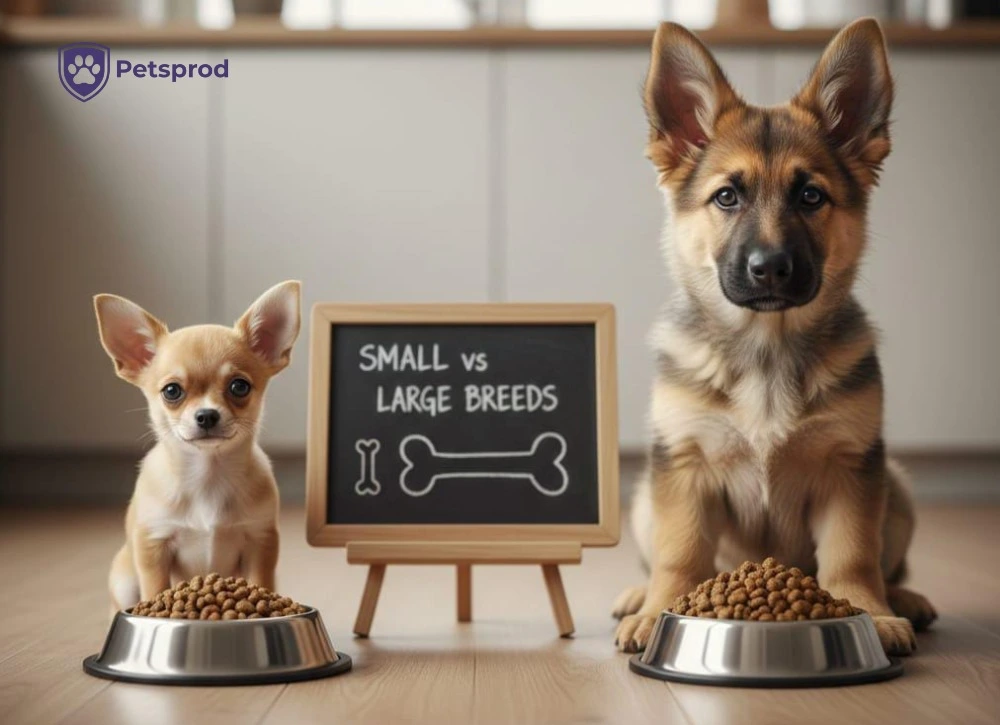
Small vs Large Breed Puppies – Why Feeding Rules Change
Size isn’t just a physical trait; it’s a biological roadmap. One of the most common mistakes new owners make is assuming a puppy is “just a puppy.” In reality, a Great Dane puppy has fundamentally different skeletal needs than a Toy Poodle. If you feed them the same way, you risk serious health complications.
Small Breed Feeding Needs: High Energy, Tiny Tanks
Small and toy breeds (like Chihuahuas or Yorkies) have incredibly high metabolic rates. They burn through energy faster than large dogs but have tiny stomachs that can only hold a few ounces of food at a time.
Faster Metabolism
They need calorie-dense food to fuel their constant movement.
Smaller Stomachs:
Because their “tank” is small, they cannot eat enough in two meals to last the day.
Higher Meal Frequency
Small pups are prone to hypoglycemia (low blood sugar), so they often need 4 or more small meals to keep their energy stable.
Large Breed Feeding Needs: The Danger of Growing Too Fast
For large and giant breeds (like Labradors, Goldens, or Shepherds), the goal isn’t “maximum growth”—it’s “controlled growth.” If a large puppy puts on weight too quickly, their bones grow faster than their joints can support.
Controlled Growth:
Their food is usually lower in fat to prevent them from becoming too heavy too soon.
Calcium & Phosphorus Balance:
They need a very specific mineral ratio. Too much calcium can actually cause permanent skeletal deformities.
Bloat Risk:
Larger dogs are more susceptible to Gastric Dilatation-Volvulus (GDV or Bloat). Feeding smaller, more frequent meals and avoiding heavy exercise after eating is vital.
‘‘ According to the PetMD Guide on Feeding Large Breed Puppies, overnutrition and rapid weight gain are the primary environmental risk factors for skeletal diseases like hip dysplasia in larger dogs.’’
Breed Size Comparison
Factor |
Small Breeds (e.g., Pug) |
Large Breeds (e.g., GSD) |
| Metabolism | Very Fast | Moderate |
| Stomach Size | Tiny | Large (but sensitive) |
| Primary Risk | Low Blood Sugar (Hypoglycemia) | Joint & Bone Issues (Dysplasia) |
| Feeding Goal | High Energy Density | Slow & Steady Growth |
Common Puppy Feeding Problems & Safe Solutions
Feeding a puppy isn’t always as simple as “set it and forget it.” From vacuum-like eating habits to sudden tummy troubles, you are bound to face a few hurdles. Knowing which issues are minor and which require a vet visit will save you a lot of stress.
Fast Eating & Gulping
Many puppies eat like they haven’t seen food in years. This “gulping” behavior is more than just bad manners; it can lead to choking or a dangerous condition called bloat (GDV), especially in larger breeds.
-
Slow Feeder Bowls
These bowls have built-in “mazes” or obstacles that force your puppy to take smaller bites and eat around the patterns.
-
Portion Split Strategy
Instead of putting the whole meal down at once, try splitting the portion into two smaller servings offered 5–10 minutes apart.
Vomiting, Diarrhea & Upset Stomach
Puppies have sensitive digestive tracts. A sudden change in food brand, eating something off the floor, or even the stress of a new environment can trigger loose stools.
-
Common Causes:
Rapid diet changes, overfeeding, or “dietary indiscretion” (eating trash or plants).
-
Mild vs. Serious:
A single episode of loose stool but high energy is usually mild. However, persistent vomiting or liquid diarrhea can lead to rapid dehydration.
-
Expert Tip:
If your puppy has a very mild upset stomach, many vets suggest a “bland diet” of plain boiled chicken and white rice (no oils or spices) for 24 hours to let the gut rest.
When to See the Vet
Puppies can get sick very quickly because they don’t have large energy reserves. Watch out for these Red Flags.
-
Refusal to Eat:
Missing more than two consecutive meals.
-
Lethargy:
Extreme tiredness or lack of interest in play.
-
Blood:
Any sign of blood in vomit or stool.
-
Frequent Vomiting:
More than 2–3 times in a single day.
-
Pain:
Crying out or acting protective over their stomach area.
-
Vet Insight:
According to the VCA Animal Hospitals Guide on Puppy Digestive Health, internal parasites and viral infections like Parvovirus are common causes of digestive upset in young dogs, making veterinary screening essential.
Feeding Problems Quick-Fix Guide
Problem |
Likely Cause |
Immediate Action |
| Gulping Food | Competition or Instinct | Use a Slow Feeder Bowl |
| Loose Stools | Sudden Food Change | 24h Bland Diet (Chicken/Rice |
| Refusing Food | Teething or Illness | Check Temp & Call Vet |
| Eating Grass | Stomach Irritation | Monitor behavior; check for toxins |
Treats, Training Rewards & the 90/10 Rule
Training a puppy requires a lot of “currency” (treats!), but those calories add up faster than most owners realize. To keep your puppy healthy and ensure they grow correctly, you must balance their enthusiasm for rewards with their actual nutritional needs.
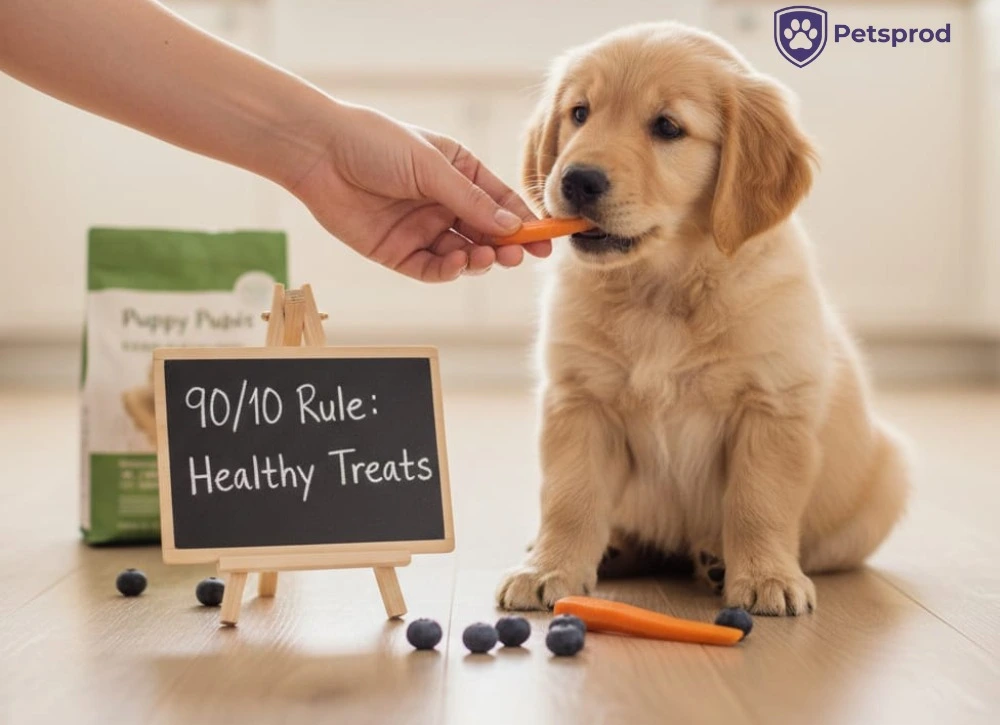
What Is the 90/10 Rule?
The 90/10 rule is the gold standard for pet nutrition. It’s a simple way to ensure your puppy gets the nutrients they need without becoming overweight:
-
90% Daily Calories:
Must come from a complete and balanced puppy food that meets AAFCO (Association of American Feed Control Officials) standards for growth.
-
10% Daily Calories:
This is the maximum amount allowed for treats, dental chews, and human food snacks.
- If treats exceed 10%, you risk “diluting” essential minerals like calcium and phosphorus, which are vital for bone development.
Choosing the Right Treats
Not all treats are created equal. Using a “value system” helps you train effectively without overfeeding:
High-Value Treats
Think small bits of boiled chicken, freeze-dried liver, or plain string cheese. Save these for difficult environments or brand-new commands.
Low-Value Treats
Use individual pieces of their regular puppy kibble or crunchy vegetables like green beans. These are perfect for practicing commands they already know.
Healthy Options
Blueberries, carrot slices, and plain air pushed popcorn (no salt/butter) are great low-calorie fillers.
Treat Calories & Recommendations
Knowing the calorie count helps you stay within that 10% limit.
Treat Item |
Approx. Calories |
Best Use Case |
| Puppy Kibble (1 piece) | 1-2 kcal | Repetitive indoor training |
| Boiled Chicken (Small bit) | 5 kcal | High-distraction environments |
| Carrot Slice | 3-4 kcal | Healthy, low-calorie crunch |
| Commercial Biscuit | 25–100 kcal | Bedtime snack (break into pieces) |
Avoiding Overfeeding with Treats
Training shouldn’t lead to weight gain. If you know you have a long training session planned, follow these strategies:
-
Adjust the Main Meal:
Subtract the calories given as treats from their next meal. If they had 50 calories of chicken during training, reduce their dinner by roughly that same amount.
-
The “Kibble Swap”:
Take a portion of their measured daily meal and put it in a treat pouch. Use their own food for training throughout the day so they aren’t getting “extra” calories.
-
Smaller is Better:
Puppies don’t care about the size of the treat; they care about the scent and the reward. Break treats into pieces no larger than a pea.
-
Vet Insight:
According to PetMD, treats should make up no more than 10% of your puppy’s daily caloric intake, with the remaining 90% coming from a complete and balanced diet. Keeping treat calories low helps prevent unintended weight gain, obesity related health problems, and ensures your puppy continues to eat its nutritionally complete food.
Toxic Foods Puppies Must Never Eat
A puppy’s curiosity often leads them to explore the world with their mouth. While it might be tempting to share a scrap from your plate, many common human foods are highly toxic to dogs. Because puppies are small and their organs are still developing, even a tiny amount of the wrong food can lead to a medical emergency.
High-Risk Foods (Life-Threatening)
These items are considered “Red Alert” foods and should be kept in high cabinets or locked pantries:
-
Chocolate:
Contains theobromine and caffeine, which puppies cannot metabolize. It can cause heart arrhythmias and seizures.
-
Xylitol
This artificial sweetener is found in sugar-free gum, some peanut butters, and baked goods. It causes a life-threatening drop in blood sugar and liver failure.
-
Grapes & Raisins:
Even a single grape can cause sudden and irreversible kidney failure in some dogs.
-
Onions & Garlic:
Whether raw, cooked, or powdered, these damage a puppy’s red blood cells, leading to anemia.
-
Cooked Bones:
Unlike raw bones, cooked bones become brittle and can splinter, causing internal punctures or fatal intestinal blockages.
Toxic Foods & Emergency Risks
Food Item |
Primary Risk |
Immediate Action |
| Chocolate | Heart & Nervous System distress | Call Vet / Induce vomiting if advised |
| Xylitol | Sudden Liver Failure | Emergency Vet visit immediately |
| Grapes | Acute Kidney Failure | Do not wait; seek emergency care |
| Onions | Red Blood Cell damage | Monitor for pale gums and lethargy |
| Cooked Bones | Internal Lacerations | Watch for choking or abdominal pain |
Emergency Guidance: What to Do
If you suspect your puppy has ingested something toxic, do not wait for symptoms to appear. Many toxins cause internal damage long before the puppy looks “sick.”
Identify the Substance:
If possible, grab the packaging or a sample of what they ate.
Call for Help:
Contact your veterinarian or an animal poison control center immediately.
Stay Calm:
Keep your puppy quiet and do not induce vomiting unless specifically instructed to do so by a professional.
Expert Tips & Puppy Feeding
Mastering your puppy’s nutrition takes more than just the right food; it takes the right habits. These vet-approved tips and answers to common questions will help you navigate the daily routine with confidence.
- Feed your puppy at the same time every day. A predictable schedule regulates their digestive tract and makes potty training much easier.
- Don’t rely on “eyeballing” the food. Use a standard measuring cup or a kitchen scale to ensure you aren’t accidentally overfeeding.
- Look for the AAFCO statement on the bag to ensure the food is “complete and balanced” for the “growth stage” or “all life stages”.
- If you are feeding a high-quality, balanced puppy food, adding extra calcium or vitamins can actually harm bone development, especially in large breeds.
Conclusion (Building a Healthy Feeding Routine)
Feeding your puppy is about more than just filling a bowl it’s about providing the foundation for a long, healthy life. By sticking to an age-based schedule, practicing strict portion control, and choosing high-quality food, you are setting your dog up for success
While this guide covers general best practices, every puppy is different, so it’s always important to consult your veterinarian to tailor feeding and growth plans to your puppy’s specific breed, size, and health needs.
FAQ’s
Q: What should I do if my puppy misses a meal?
Don’t panic. If they seem healthy and energetic, simply wait until the next scheduled feeding time.
Q: Is free-feeding okay?
No, free feeding makes it harder to monitor how much they eat and can lead to obesity or picky eating habits.
Q: How much water should my puppy drink?
Unlike food, water should be available at all times. A good rule of thumb is roughly one ounce of water per pound of body weight daily, though this increases with activity and heat.
Q: When is the right time to switch to adult food?
A: Most small breeds switch at 10–12 months. Large and giant breeds often stay on puppy formula for 18–24 months to ensure their joints develop fully.