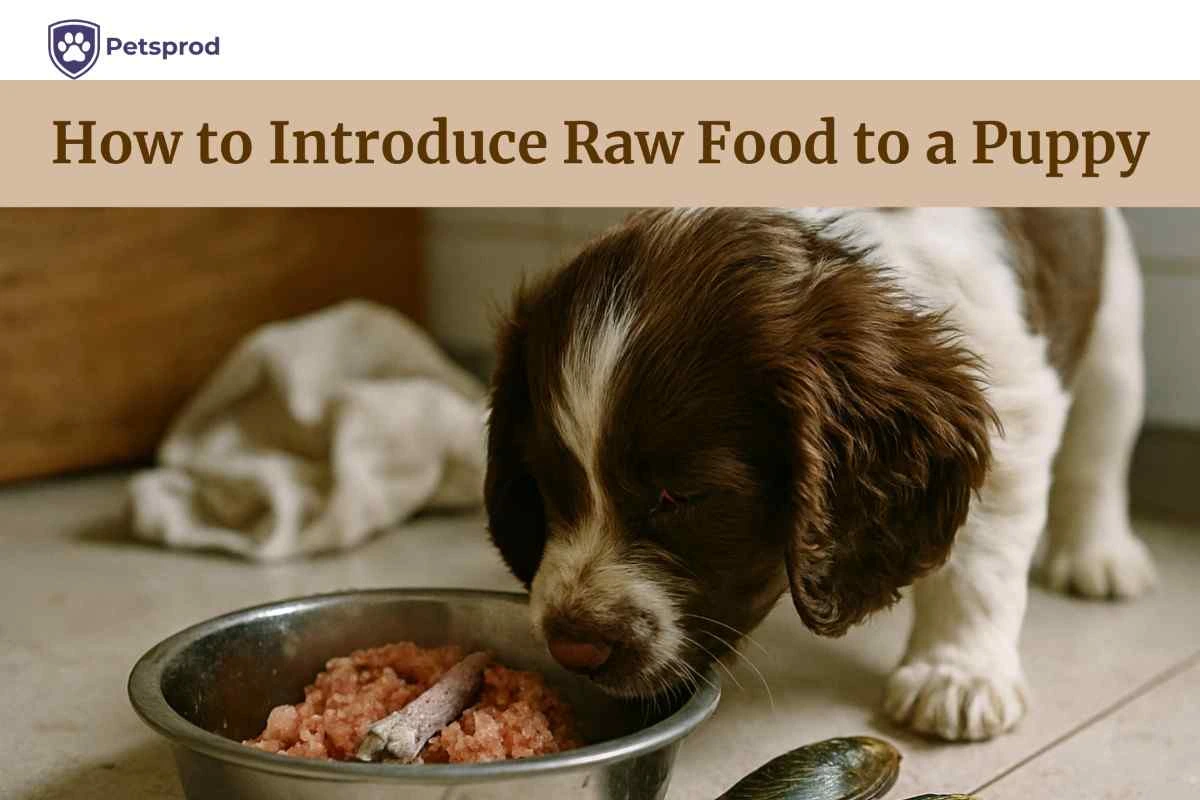
How to Introduce Raw Food to a Puppy
Introducing raw food to a puppy the wrong way is worse than kibble.
That one sentence is what most guides are afraid to say, but it makes getting the sequence right critical for UK puppy owners sourcing from Tesco/Sainsbury’s.
Done correctly, it takes 4-6 weeks for results to show in firm stools first (Day 7), a shinier coat (Week 3), and then steady energy.
This guide gives you the exact week-by-week Tesco-approved schedule, puppy-specific 80/10/10 ratios, and 3 nutrient gaps every raw feeding guide misses so you do this perfectly from Day 1.
Why Puppies Digest Raw Food Differently Than Adults
A puppy’s digestive system is not a smaller version of an adult dog’s; it is fundamentally different in how it responds to food, and understanding this makes the entire transition make sense.
The Biology Most Guides Skip
Unlike humans, dogs have no salivary amylase, the enzyme that begins carbohydrate digestion in the mouth. Instead, canine saliva contains lysozyme, an antimicrobial enzyme that provides a first line of defense against pathogens in raw tissue. This single biological fact explains why dogs are equipped to safely consume raw meat that would make a human sick. The canine stomach maintains a pH between 1.0 and 3.0 during digestion.
According to gastric pH research documented by Hanna R.A., this hyper-acidic environment breaks down complex animal proteins and neutralizes most ingested bacteria. This is not a side effect of raw feeding; it is the biological baseline the canine digestive system was built around.
The Gut Is Plastic During Puppyhood
A puppy’s gastrointestinal microbiome is still forming. Think of it like fresh clay; it shapes itself around whatever you feed it consistently in the early weeks. Get it right, and the gut flora establishes itself optimized for protein and fat metabolism. Rush it and you cause osmotic diarrhea and microbial dysbiosis that sets the puppy back weeks.
According to puppy raw feeding guides from Raw Performance Dog Food and Perfectly Rawsome, puppies can begin raw feeding as early as weaning, typically around 3 to 4 weeks of age. For puppies transitioning from kibble, a structured 7-to-14-day protocol is the standard recommended approach.
The Week-by-Week Raw Food Transition Schedule
The goal of the transition period is not speed; it is letting the gut flora shift gradually from starch-fermenting bacteria to protein- and fat-metabolizing bacteria without overwhelming the system.
Days 1–12: The Foundation Phase
Start with a single lean protein, skinless, boneless chicken, or turkey breast. No fat, no bone, no organs yet.
| Days | Raw % | Previous Diet % | Protein |
|---|---|---|---|
| 1–3 | 25% | 75% | Lean Chicken/Turkey |
| 4–6 | 50% | 50% | Lean Chicken/Turkey |
| 7–9 | 75% | 25% | Lean Chicken/Turkey |
| 10–12 | 100% | 0% | Lean Chicken/Turkey |
| 13+ | 100% | 0% | Begin Red Meat |
If stools become loose at any stage, hold at that percentage for two extra days before advancing. The table is a guide; your puppy’s stool is the real schedule. Alongside portions, how often you feed during each growth stage keeps metabolism stable as raw percentages increase week by week.
Days 3–5: Introducing Soft Bone
Once stools are firm for three consecutive days, introduce soft edible bone at a 10% ratio. Appropriate options for puppies include chicken necks, chicken wings, and chicken ribs. Never feed cooked bones. Heat makes them brittle, and brittle bones can splinter and perforate the gastrointestinal tract.
Weeks 2–6: Variety, Organs, and Oily Fish
Once stable on chicken or turkey, introduce a second protein, typically beef or lamb. By Week 3, the puppy should be eating at least three different proteins. Liver comes last, starting with a piece no larger than a fingernail; it causes loose stools rapidly if overfed. After liver is established, add oily fish such as sardines or mackerel two to three times per week as the primary source of omega-3 fatty acids (EPA and DHA) essential for brain and eye development, and if you are still deciding when to start raw feeding altogether, the biological readiness timeline covers that week by week.
The 80/10/10 Rule and Why Puppies Need It Adjusted
The 80/10/10 framework means 80% muscle meat, 10% edible bone, and 10% organ meat, typically split as 5% liver and 5% other secreting organ. It is a sound starting point, but it contains documented deficiencies that require active correction in a growing puppy.
What Counts as Muscle Meat
Secreting organs liver, kidney, spleen, pancreas, brain are sometimes called nature’s multivitamins. Liver alone provides Vitamin A, vitamin D, iron, copper, and B12 in concentrations no muscle meat can match. Because of this potency, organs must be introduced last and in small amounts to prevent vitamin toxicity and digestive upset.
The Nutrient Gaps Nobody Talks About
This is where most raw feeding guides stop and where most raw-fed dogs develop problems years later.
The Manganese Gap
Manganese is a trace mineral essential for the production of chondroitin sulfate, the compound that builds healthy ligaments, tendons, and joint cartilage. The problem is that land-based meats are chronically low in it.
The Feed Real Institute shows that a standard beef-based raw diet delivers only 0.22 mg of manganese per 1,000 kcal. A chicken-based diet provides even less at 0.12 mg. The NRC puppy requirement sits at 1.8 mg per 1,000 kcal, meaning most land-meat-based raw diets are chronically under-supplying the mineral most responsible for joint and ligament development. This deficiency is a primary suspect in the prevalence of cruciate ligament tears in dogs fed raw without supplementation.
| Manganese Source | Content | Notes |
|---|---|---|
| Green-Lipped Mussels | 43 mg / 1,000 kcal | Best joint support option |
| Blackberries | 23 mg / 1,000 kcal | Excellent antioxidant source |
| Pumpkin Seeds | 6 mg / 1,000 kcal | Additional antiparasitic benefit |
Adding green-lipped mussels 3 to 4 times per week is the most practical and bioavailable solution for most raw-feeding households.
The Iodine Gap
Most raw feeding guides never mention iodine. In a wild canine’s diet, iodine comes from the thyroid glands of prey animals; in a domestic raw diet, thyroid tissue is almost never included. Iodine deficiency in growing puppies leads to thyroid dysfunction affecting metabolism, growth rate, and coat quality. Small amounts of food-grade kelp powder introduced carefully are the most practical solution. Iodine has a narrow therapeutic window; both deficiency and excess cause thyroid problems, so a small pinch per meal is the right starting point.
The Vitamin E and Omega Balance
Raw diets built heavily on poultry are naturally high in omega-6 fatty acids and low in omega-3. Adding oily fish addresses the Omega-3 side, but Vitamin E is required alongside it, as it acts as an antioxidant that prevents the oxidation of polyunsaturated fats inside the body. Without it, high-fish diets can paradoxically increase oxidative stress. A small amount of vitamin E from sunflower seeds or a targeted supplement closes this gap cleanly.
Calcium-to-Phosphorus Ratio: The Number That Protects Your Puppy’s Bones
The calcium-to-phosphorus ratio is the single most critical nutritional parameter in puppy raw feeding. Puppies cannot regulate calcium absorption from the gut as efficiently as adult dogs, making them vulnerable to both deficiency and excess.
The Safe Ranges
According to Royal Canin’s Veterinary Academy, excess calcium in large-breed puppies causes the femoral head to grow faster than the socket develops, directly contributing to hip dysplasia and developmental orthopedic disease. This is why giant breeds like Great Danes require strict control throughout their 24-month growth window.
| Life Stage | Ca:P Ratio | Outcome |
|---|---|---|
| Adult Maintenance | 1.1:1 to 1.2:1 | Basic skeletal maintenance |
| Puppy Growth (General) | 1.2:1 to 1.4:1 | Optimal bone mineralization |
| Large/Giant Breed | 1.2:1 strict | Prevention of orthopedic disease |
| Deficiency below 1:1 | — | Rickets, fractures |
| Excess above 2:1 | — | Developmental bone disease |
Bone Density by Breed: A Detail Most Guides Miss
A chicken wing carries approximately 46% bone by weight, while a chicken neck sits closer to 36%. For a large-breed puppy where calcium precision matters, this distinction changes the daily calculation meaningfully.
Chicken necks are the more controllable option for large and giant breeds precisely because of this lower bone-to-meat ratio. The exact daily gram amounts by breed size and age are broken down in how much raw food to feed a puppy, which pairs directly with this calculation.
Reading Your Puppy’s Poop During the Transition
Stool quality is the most direct, real-time feedback mechanism available during a raw food transition.
- Yellow stool may be due to too much poultry or fast gut transit. Add protein variety or slightly reduce fat content.
- White or chalky stool indicates excess bone and calcium. Reduce bone-heavy cuts immediately.
- Dark black stool, high organ or blood content, generally normal. If tarry in texture, this can indicate upper GI bleeding. Sudden dietary shifts during raw transition can also trigger blood in a puppy’s stool in ways that are worth understanding before you assume the worst and require a veterinary assessment.
- Mucus-coated stool is the gut shedding its kibble-adapted lining during the first one to two weeks. Not a concern unless blood is present.
- Small, firm, dark stool is the goal. Raw-fed dogs produce significantly less waste than kibble-fed dogs because raw food is highly bioavailable, leaving very little undigested material. When you see this, the transition is working.
Is Raw Food Safe for Puppies? The Honest Answer
According to VCA Animal Hospitals, approximately 25% of commercial raw food samples test positive for Salmonella or Listeria, a statistic that deserves honest acknowledgment, not dismissal. Raw pet food carries a higher contamination risk than processed alternatives, making sourcing and handling the two variables most within an owner’s control.
The same hyper-acidic stomach environment (pH 1.0–3.0) that makes raw food digestible also neutralizes most ingested pathogens before they reach the lower GI tract. This is a strong biological defense, not a complete guarantee. Whether puppies can eat raw food safely from day one, including the clinical evidence and UK handling rules, is covered there in full.
Practical Risk Management
Handle raw dog food with the same hygiene as raw meat for your own meals. Use human-grade sourcing wherever possible. Consider HPP (High-Pressure Processing) brands; cold pressure eliminates pathogens while preserving nutritional integrity. Use stainless steel or ceramic bowls only; plastic develops microscopic scratches that harbor bacteria permanently. For households with vulnerable members, our [raw food safety guide] covers UK-specific handling rules in full.
Conclusion
Introducing raw food to a puppy is not complicated when you follow the right sequence. Start lean, go slow, and let the stool guide your pace.
Three things matter above everything else: keep the calcium-to-phosphorus ratio between 1.2:1 and 1.4:1, add green-lipped mussels from Week 1 to bridge the manganese gap, and introduce organs last, starting with a piece no larger than a fingernail.
Most puppies complete the transition in 4 to 6 weeks. Get the sequence right, and the results are joint health, immune strength, digestive efficiency, and compounds across the dog’s entire life.
Save this guide. Come back to it each week. And when you see that first small, firm, dark stool, you’ll know it’s working.
Every puppy is different. Before making any changes to your puppy’s diet, observe how your dog responds at each stage and consult your vet before starting, especially if your puppy has an existing health condition or you have any concerns along the way.
FAQ: People Also Ask
When can puppies start eating raw food?
Puppies can begin raw food at weaning, around 3 to 4 weeks of age. For puppies transitioning from kibble at 7 to 8 weeks, a gradual 7-to-14-day transition starting at 25% raw is the recommended protocol to avoid digestive upset.
What raw bones are safe for puppies?
Safe raw bones for puppies are soft, edible bones that can be fully crushed, such as chicken necks, chicken wings, and chicken ribs. Never feed cooked bones of any kind. Cooked bones splinter and can cause serious internal injury.
What is the 80/10/10 raw diet for puppies?
The 80/10/10 ratio means 80% muscle meat, 10% edible bone, and 10% secreting organs, typically 5% liver and 5% other organs. For puppies, this ratio requires active supplementation for manganese and iodine, which land-based meats consistently fail to supply at NRC-recommended levels.
How do I know if raw food is working for my puppy?
The clearest signs are small, firm, dark stools; improved coat shine within 4 to 6 weeks; more consistent energy; and reduced shedding. White chalky stools or loose stools indicate a specific imbalance in bone or fat content that can be corrected by adjusting ratios.
Is raw food better than kibble for puppies?
Raw food provides protein with over 90% bioavailability compared to processed kibble. It eliminates starch fillers, as the canine digestive system is not built to process them efficiently. However, a raw diet requires active nutritional planning; an unbalanced raw diet is worse than a complete commercial kibble.
What should I do if my puppy gets diarrhea on raw food?
Return to the previous transition percentage for 48 hours. Ensure only one new food is being introduced at a time. If diarrhea persists beyond 3 days or contains blood, consult a veterinarian. Persistent diarrhea in young puppies causes dehydration faster than most owners expect.
Why is manganese important in a puppy’s raw diet?
Manganese builds the ligament and joint cartilage structure through chondroitin sulfate production. Standard raw diets provide 0.12 to 0.22 mg per 1,000 kcal against an NRC puppy requirement of 1.8 mg, a gap directly linked to cruciate ligament injuries in adult dogs. Green-lipped mussels bridge this gap most effectively.
Do I need supplements on a raw puppy diet?
Three are consistently recommended: green-lipped mussels or pumpkin seeds for manganese, food-grade kelp for iodine, and oily fish or fish oil for EPA and DHA. Vitamin E should accompany any fish oil addition to prevent oxidative fat breakdown inside the body.